Introduction
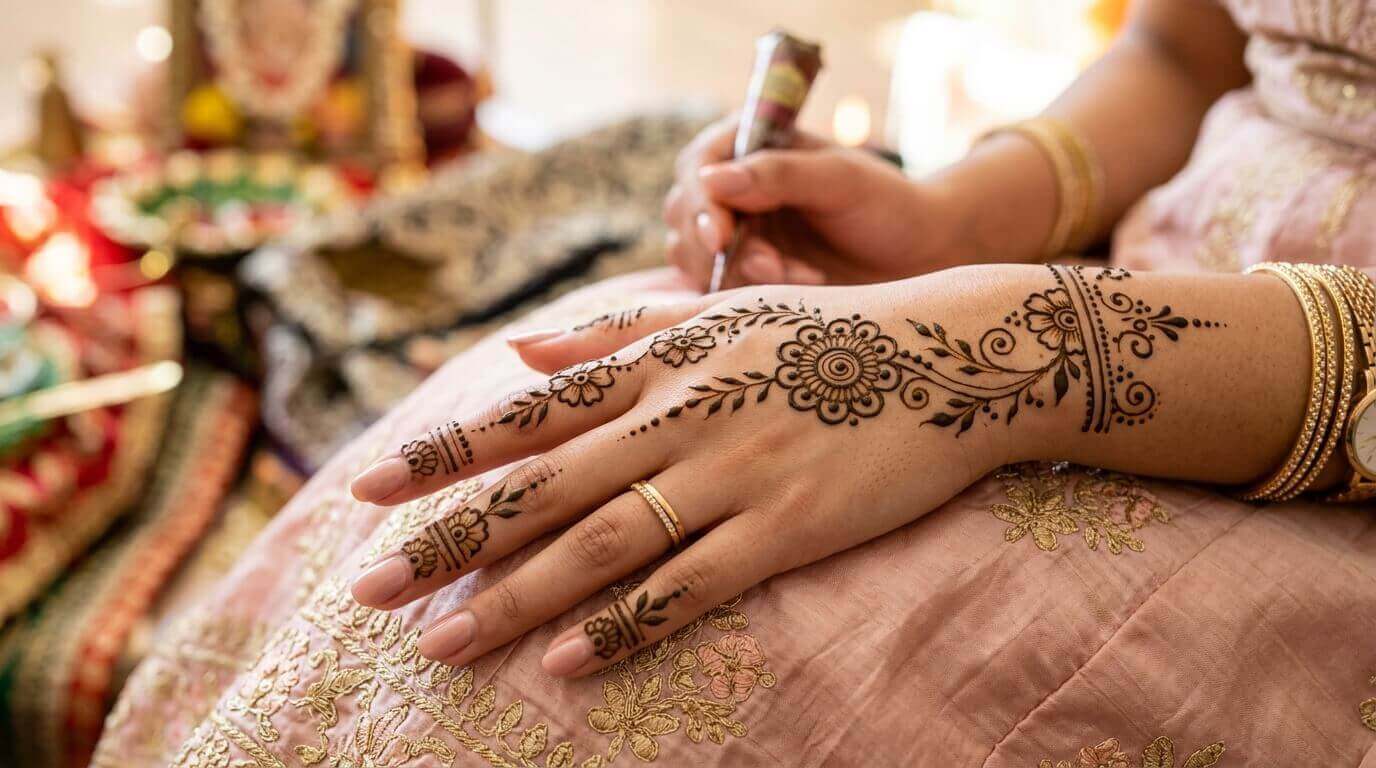
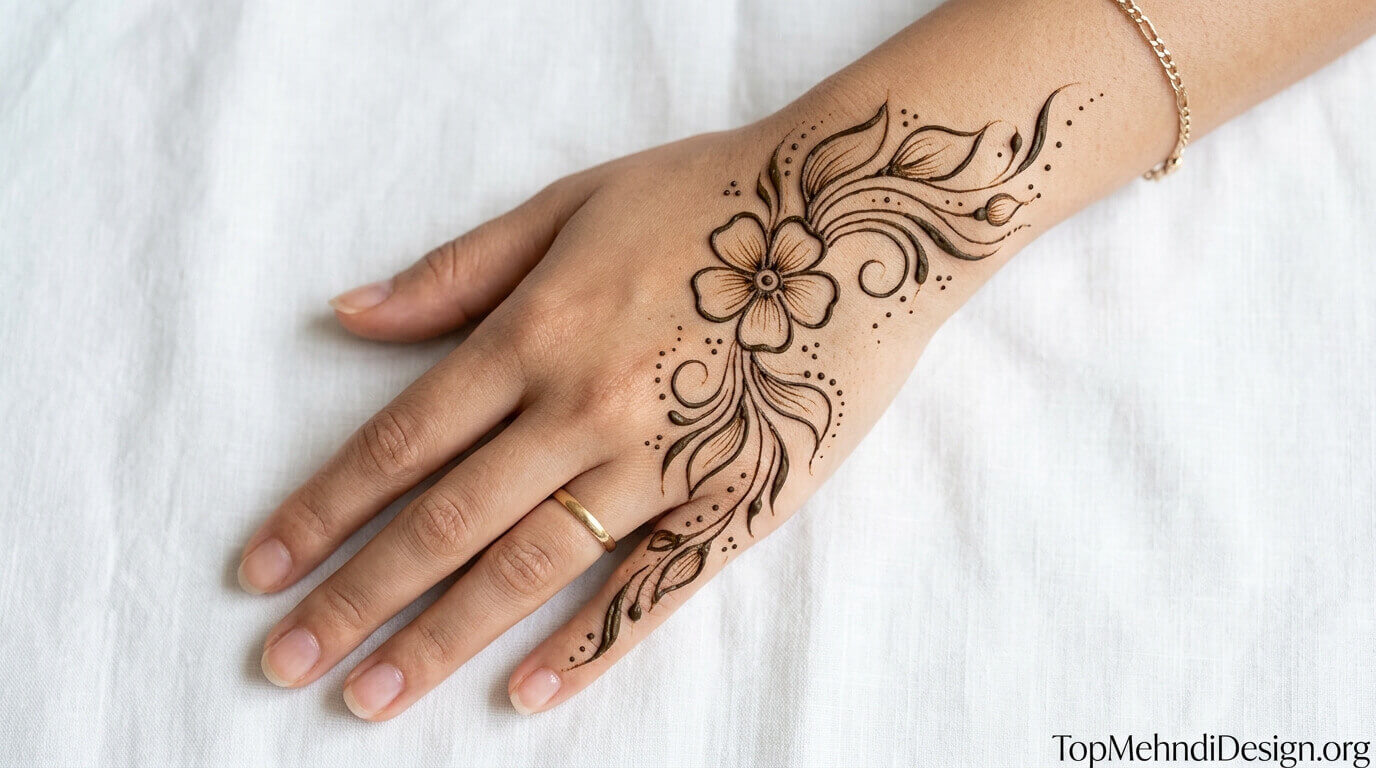
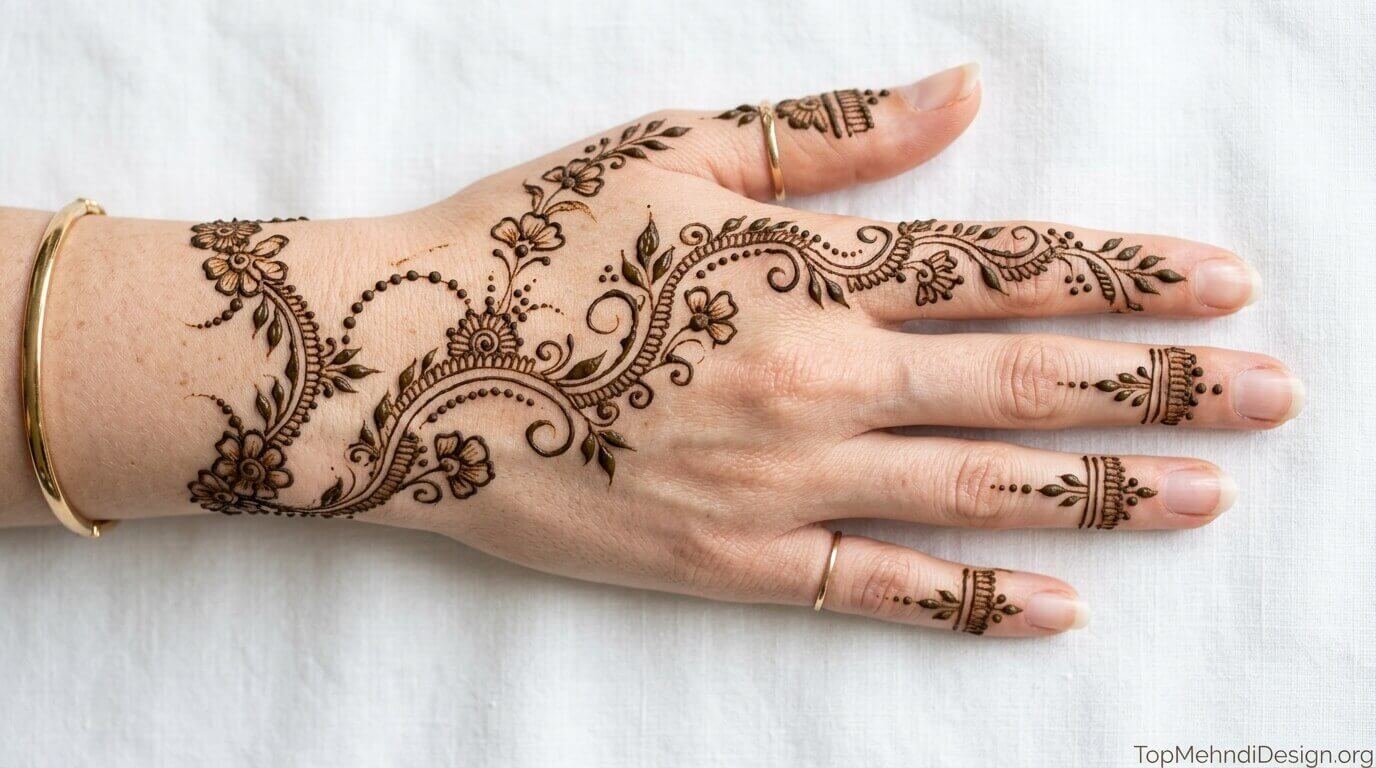
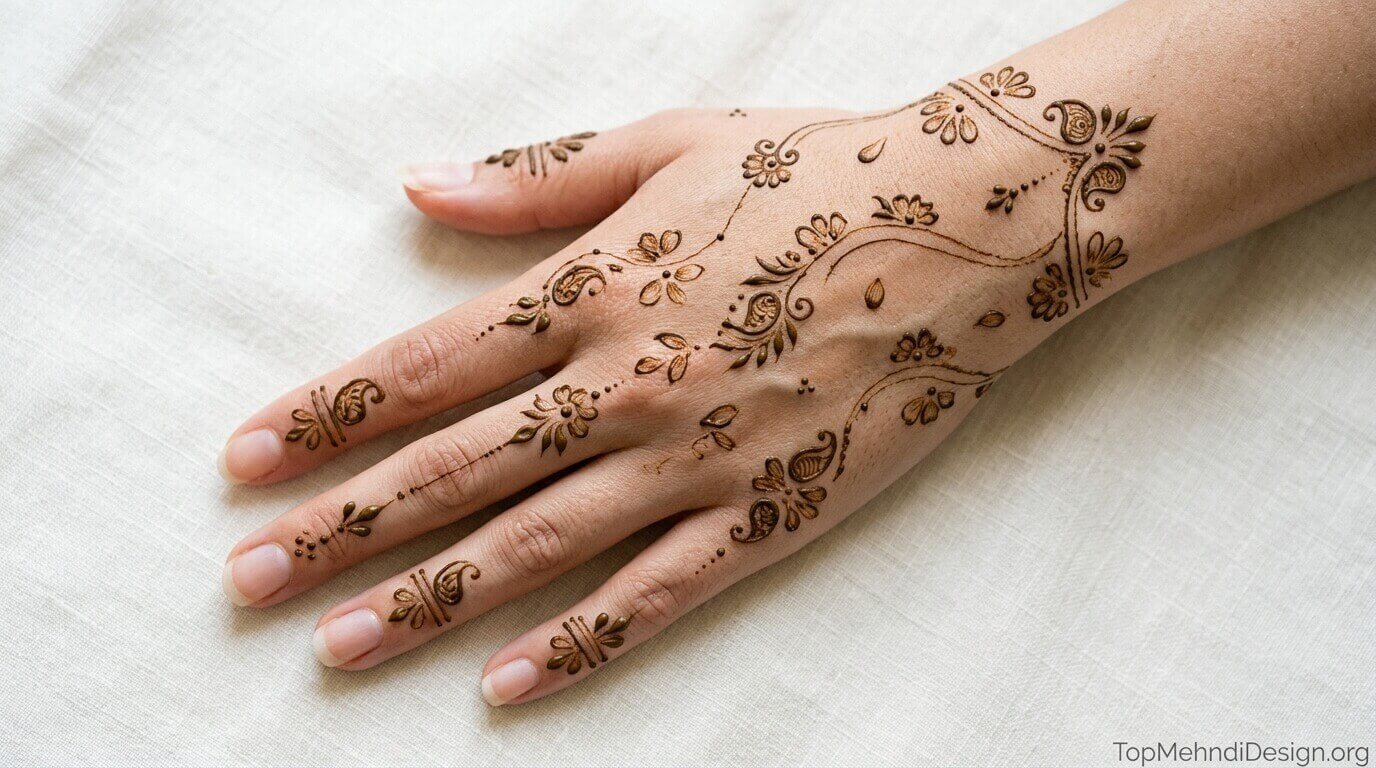
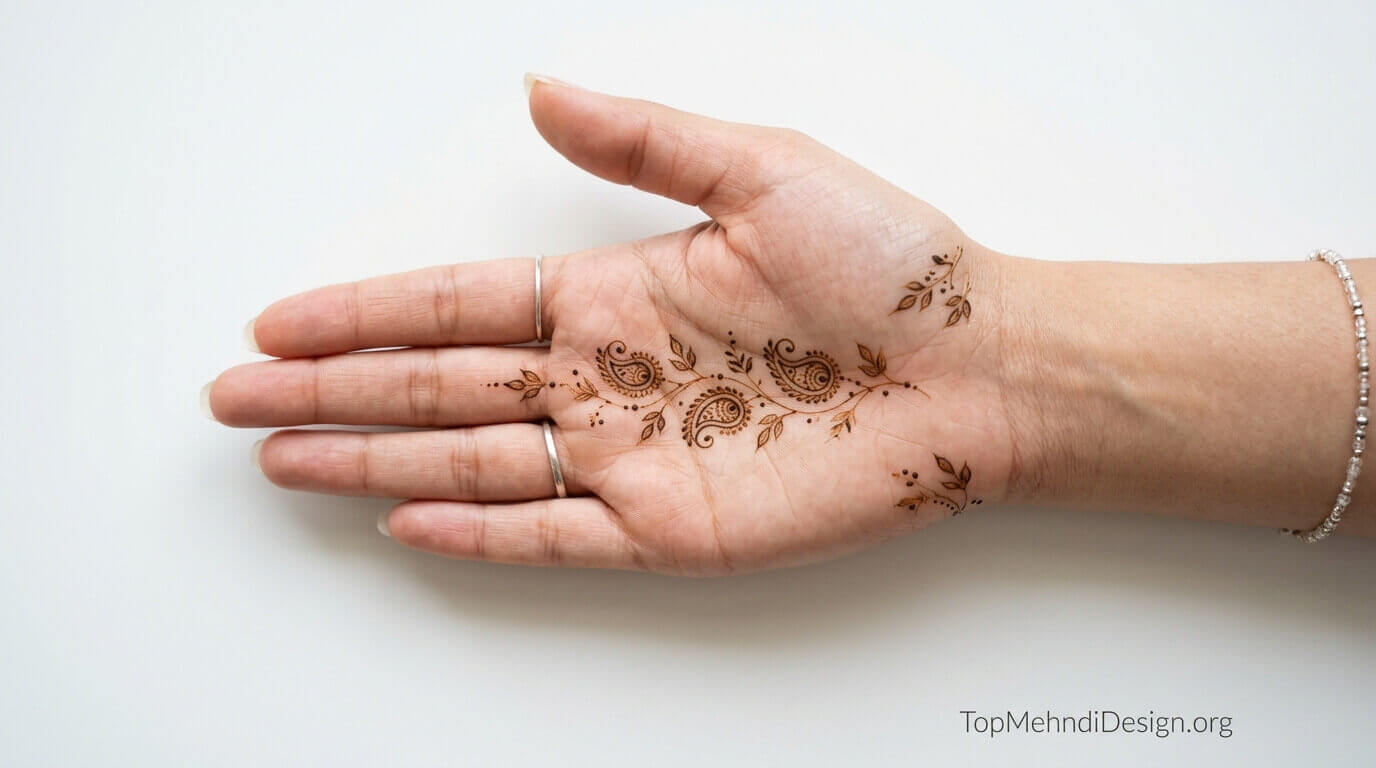
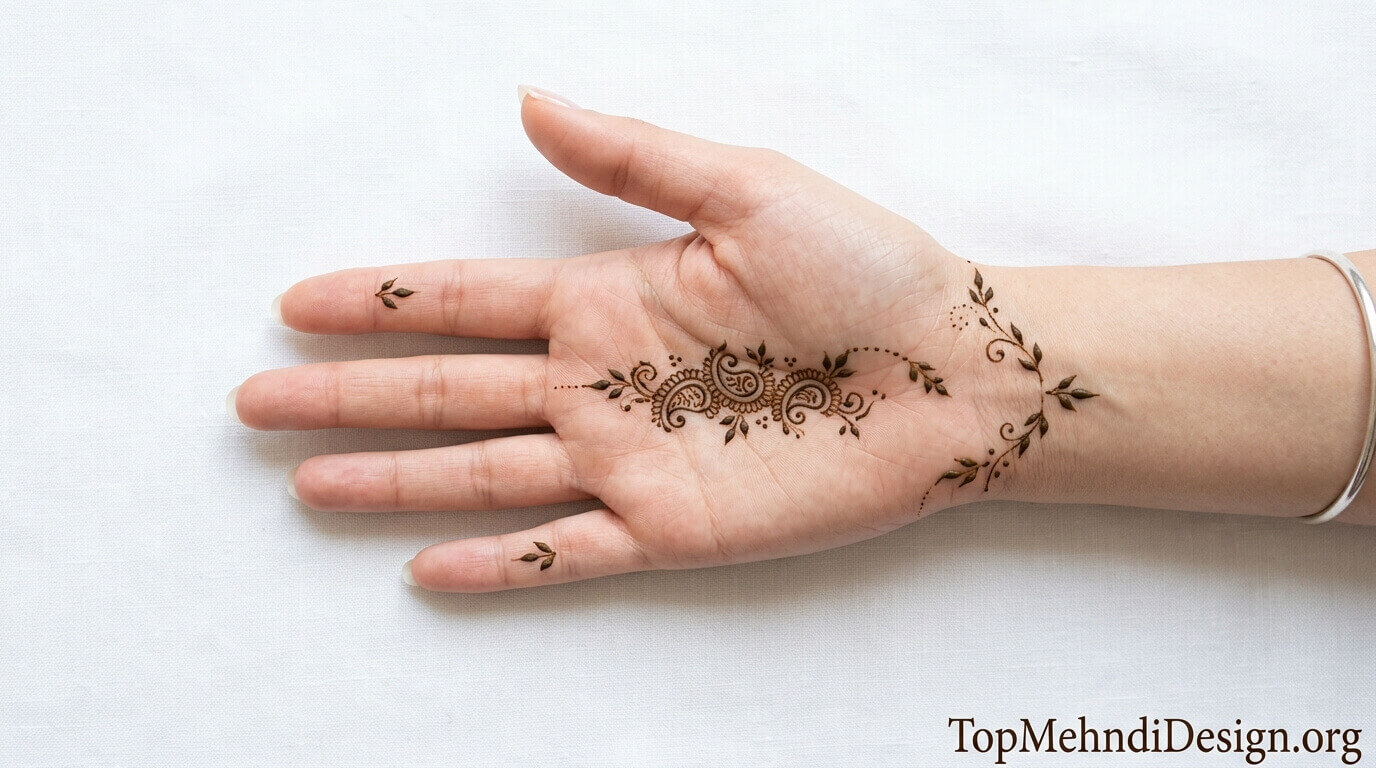
Khafif Mehndi Design for Beginners 2026 is the most recommended starting point for anyone learning henna in 2026. The word khafif comes from Arabic, meaning light, soft, and delicate, and that is exactly what makes this style perfect for beginners.
Thin flowing lines, minimal filling, and open spacing between elements mean that small imperfections are nearly invisible, and beautiful results come from the very first attempt.
This complete guide gives you 50+ easy Khafif Mehndi Designs for Beginners 2026, chosen for beginners with full step-by-step instructions, practice tips, and expert secrets for achieving gorgeous light henna patterns at home without any prior experience.
- ⭐ Why Khafif for Beginners? Khafif Mehndi is forgiving, quick to apply, and produces professional-looking results even on your very first attempt. Thin lines and open spaces hide small mistakes naturally!
What is Khafif Mehndi Design?
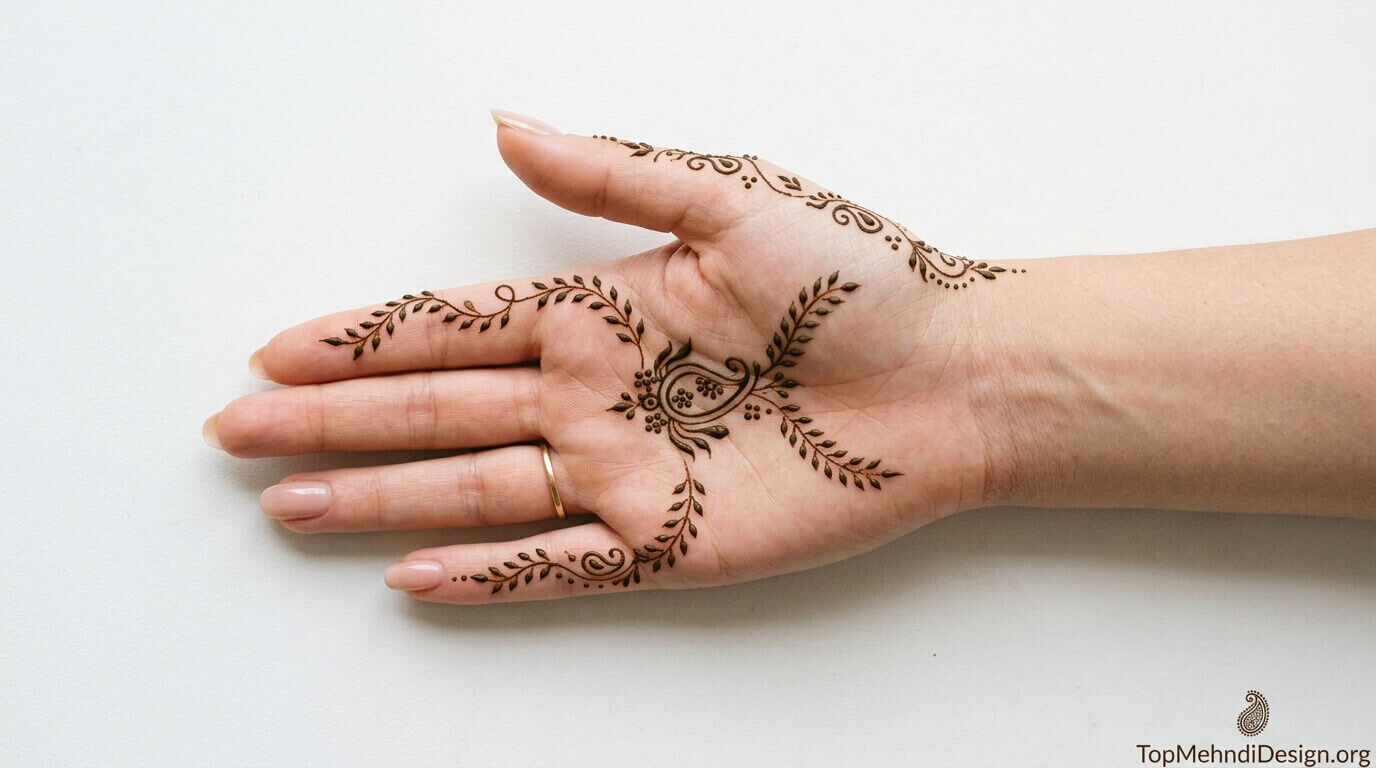
Khafif Mehndi Design for Beginners 2026 is a henna style that emphasizes lightness, delicacy, and intentional space. Unlike traditional Pakistani or Indian bharwa mehndi that fills every inch of the hand with dense, intricate patterns, khafif works on the philosophy that less is more, that thin, precise lines create more sophistication than heavy filling ever could.
Every element in a khafif design is deliberately placed with thoughtful spacing between motifs, creating breathing room that makes the overall composition look clean, modern, and genuinely elegant.
In 2026, khafif mehndi for beginners has become the most recommended entry point into henna art because its forgiving nature and beautiful results build confidence rapidly.
Why Khafif Mehndi is Perfect for Beginners
- Thin lines with open space: small imperfections are barely visible in the final result
- Fewer elements to draw: less complexity means less opportunity for mistakes
- Faster application: most beginner khafif designs are completed in 15 to 25 minutes
- Designs look intentionally minimal: open space reads as an artistic choice, not an incomplete work
- Easy to correct: thin henna is simpler to wipe and redo than thick, heavy patterns
- Beautiful results from attempt one: Khafif always looks complete and professional
50+ Easy Khafif Mehndi Designs for Beginners 2026
Absolute Beginner Designs (Under 15 Minutes)
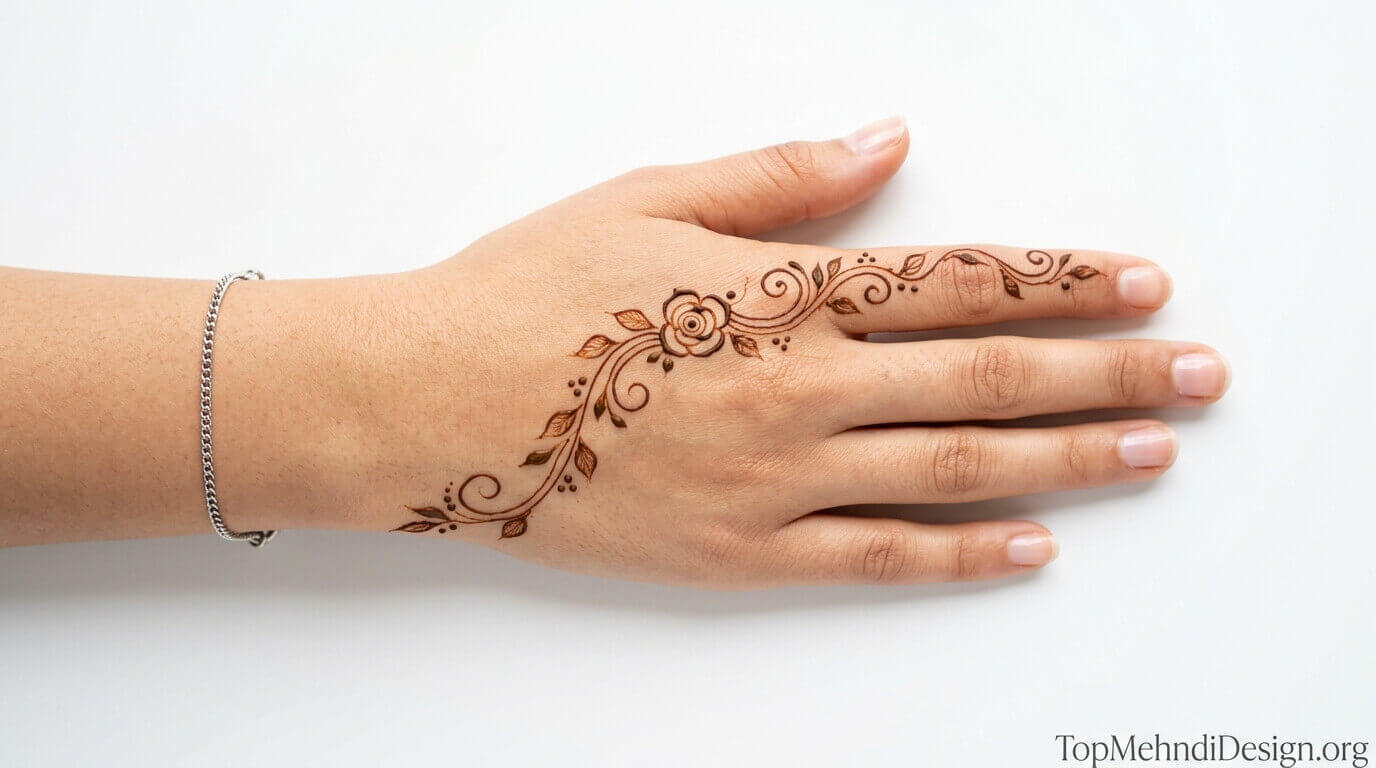
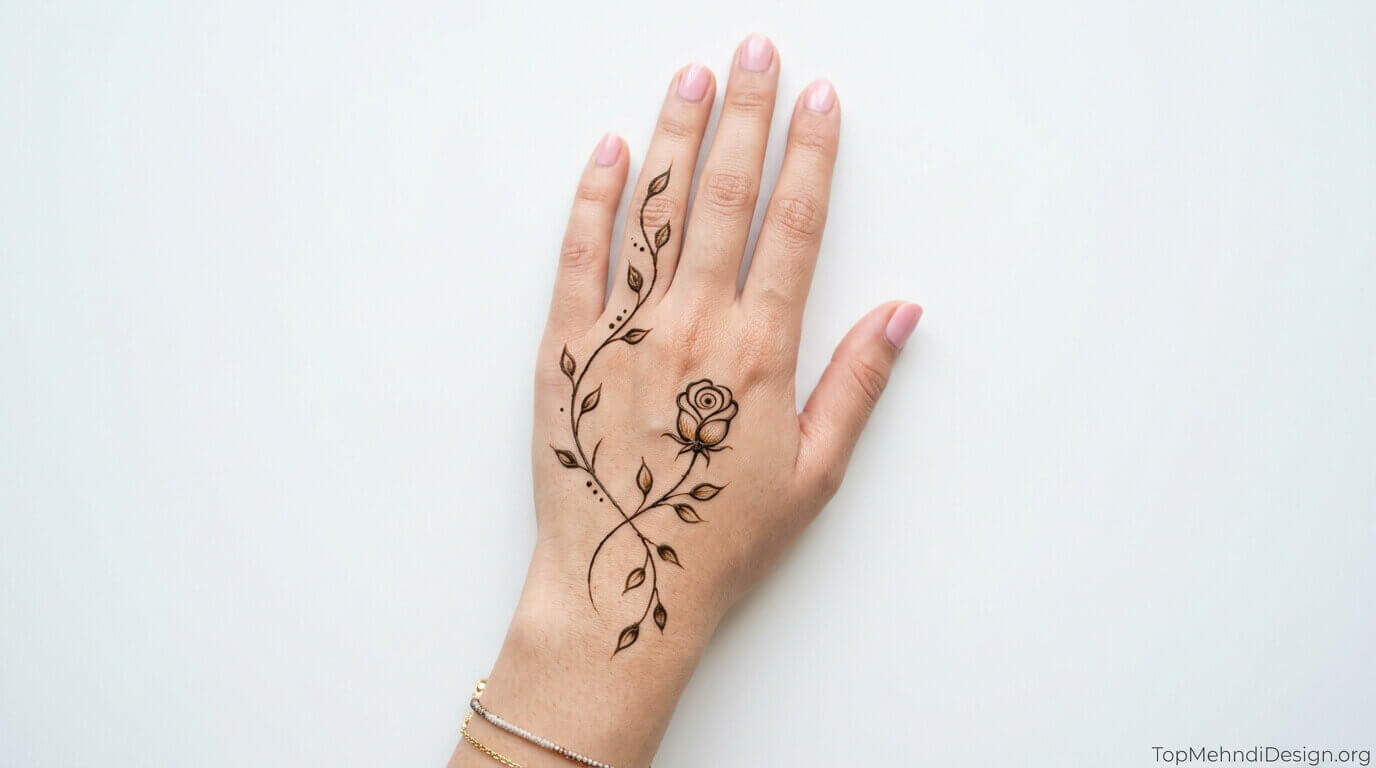
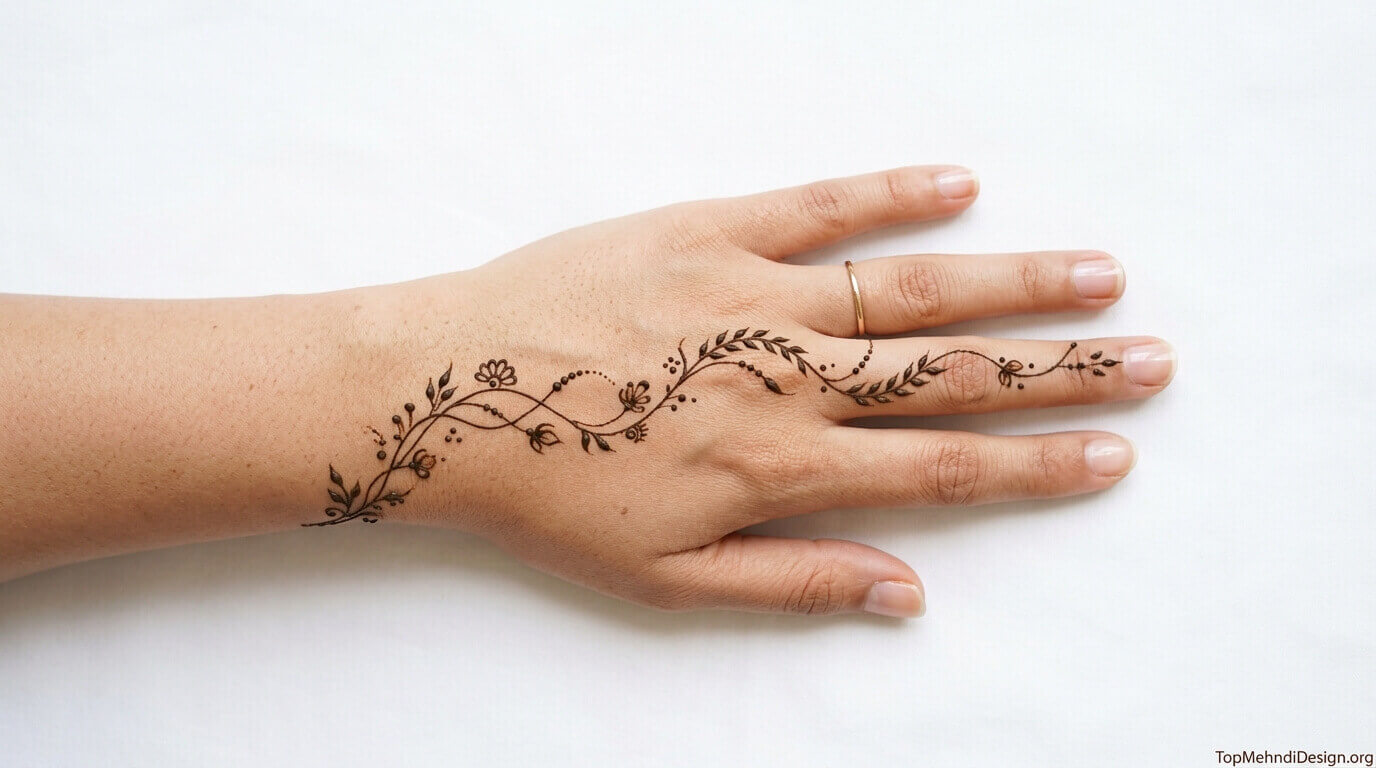
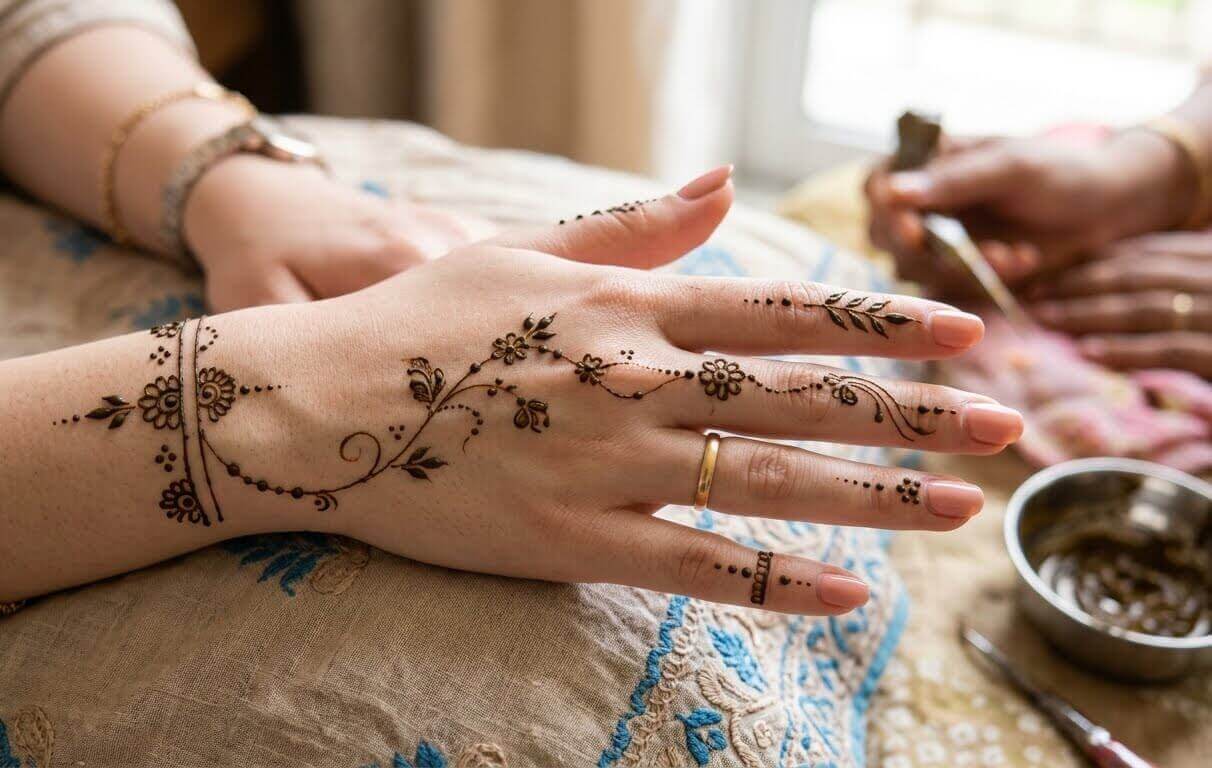
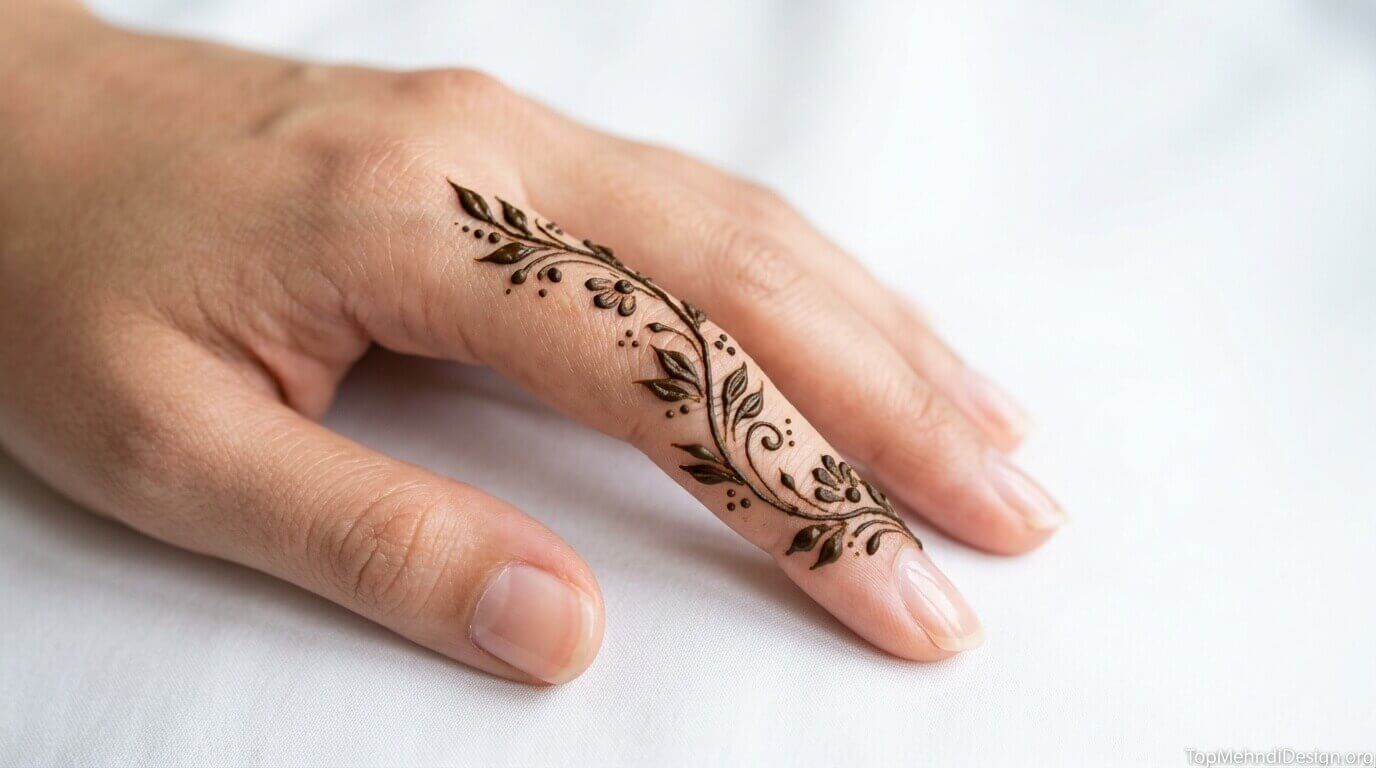
- Single vine trail: One thin, flowing vine from wrist to middle finger with 5 to 7 small leaves
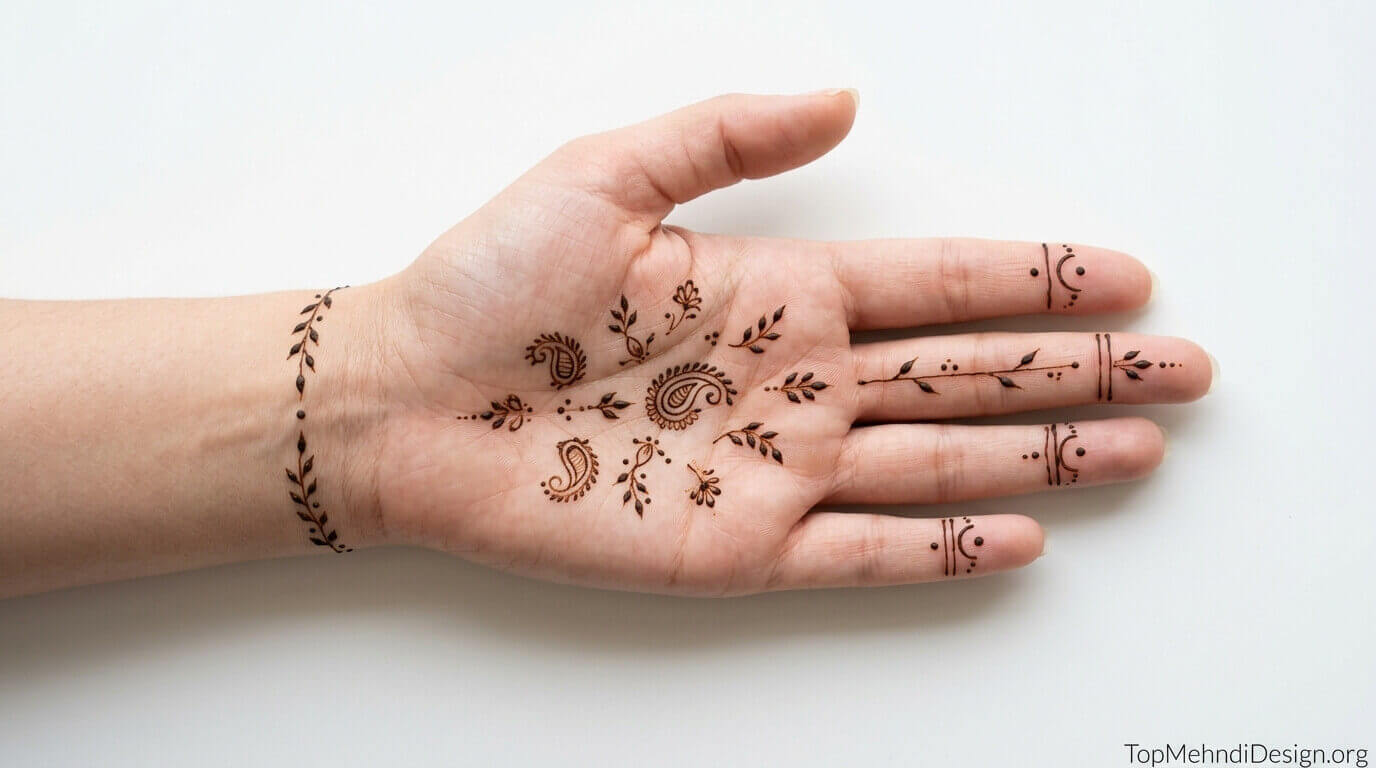
- Simple dot bracelet: Ring of evenly spaced dots circling the wrist
- Single Arabic rose: One bold rose with 5 petals and 3 small leaf accents
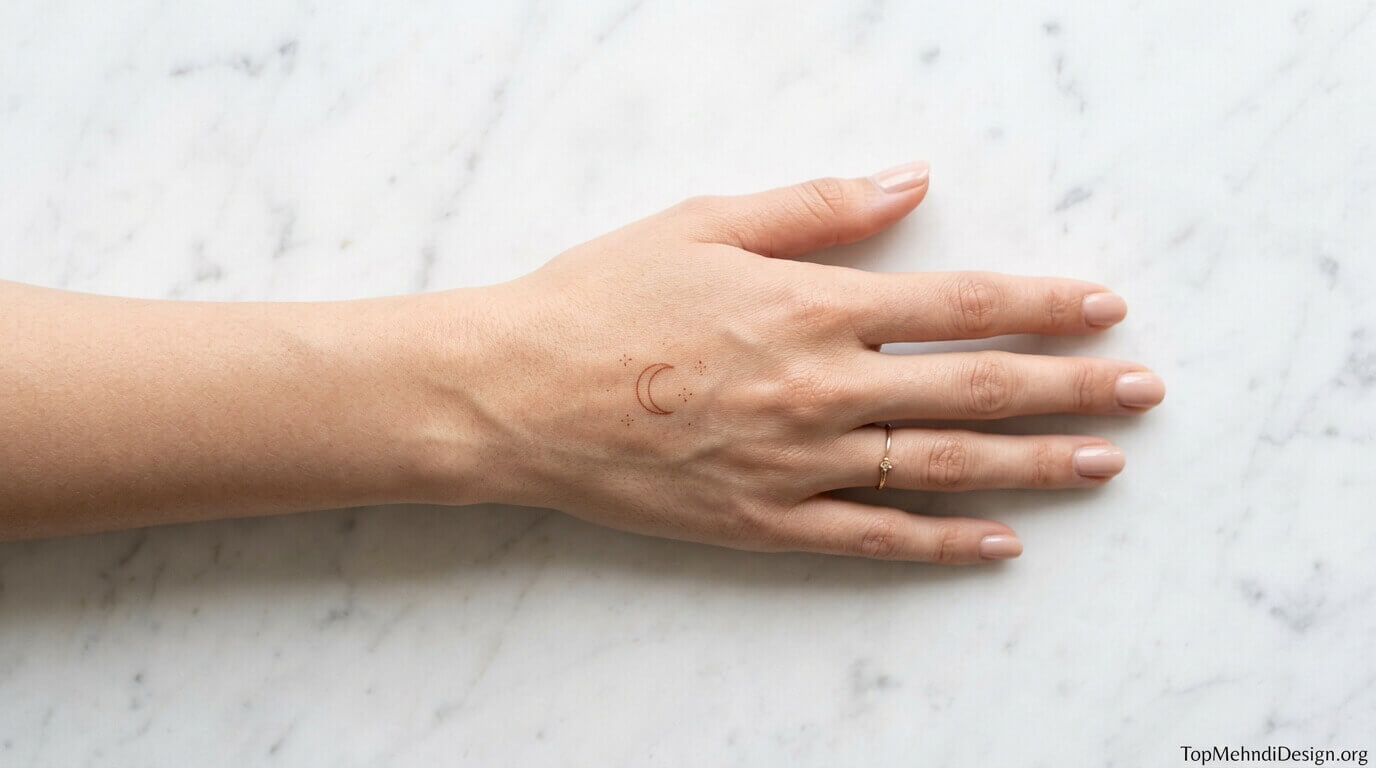
- Crescent moon finger: Tiny crescent moon on index fingertip
- Simple wrist band: Single thin line with dot accents around wrist
- Three-leaf composition: Three simple leaf shapes arranged on the back of the hand
- Dot flower: Five dots forming a flower on the palm center
- Single teardrop: One large teardrop motif with a dot border on the back hand
Easy Beginner Designs (15 to 25 Minutes)
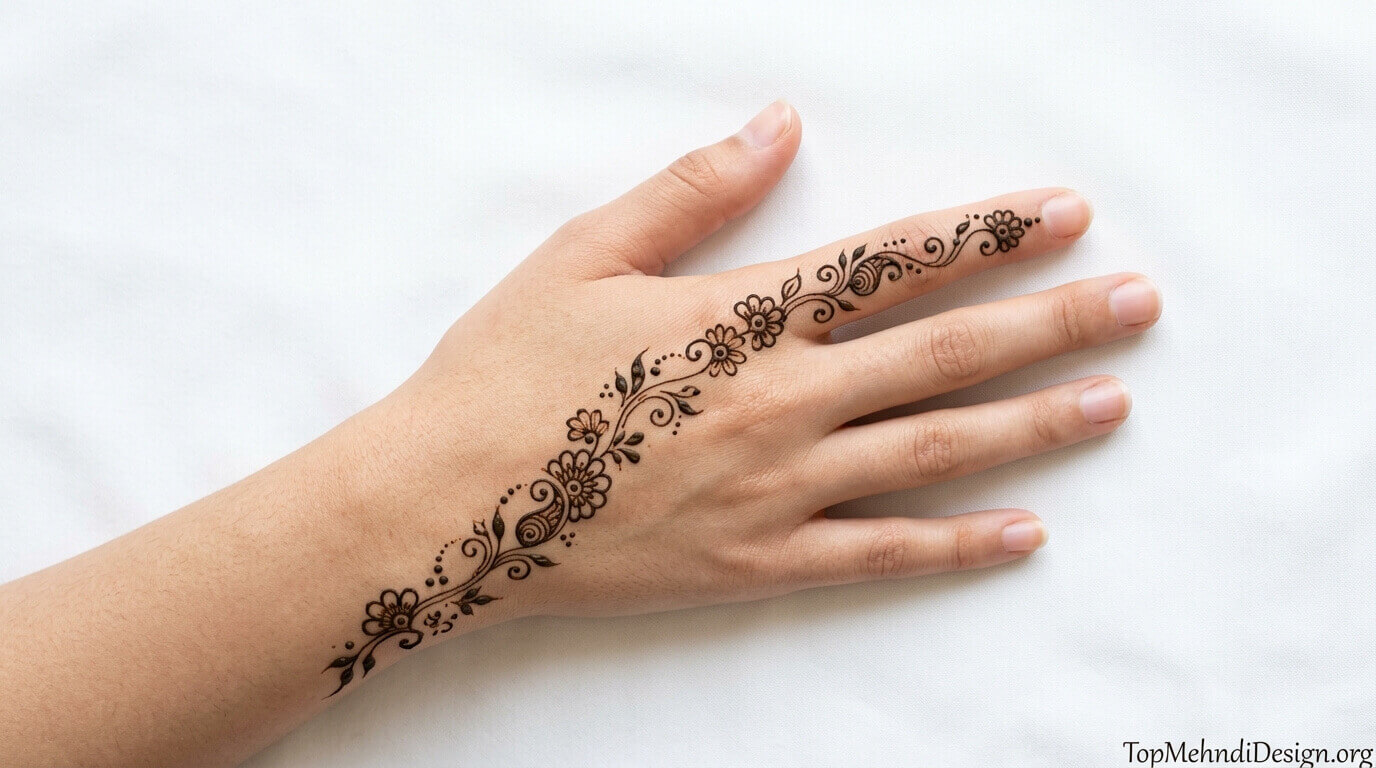
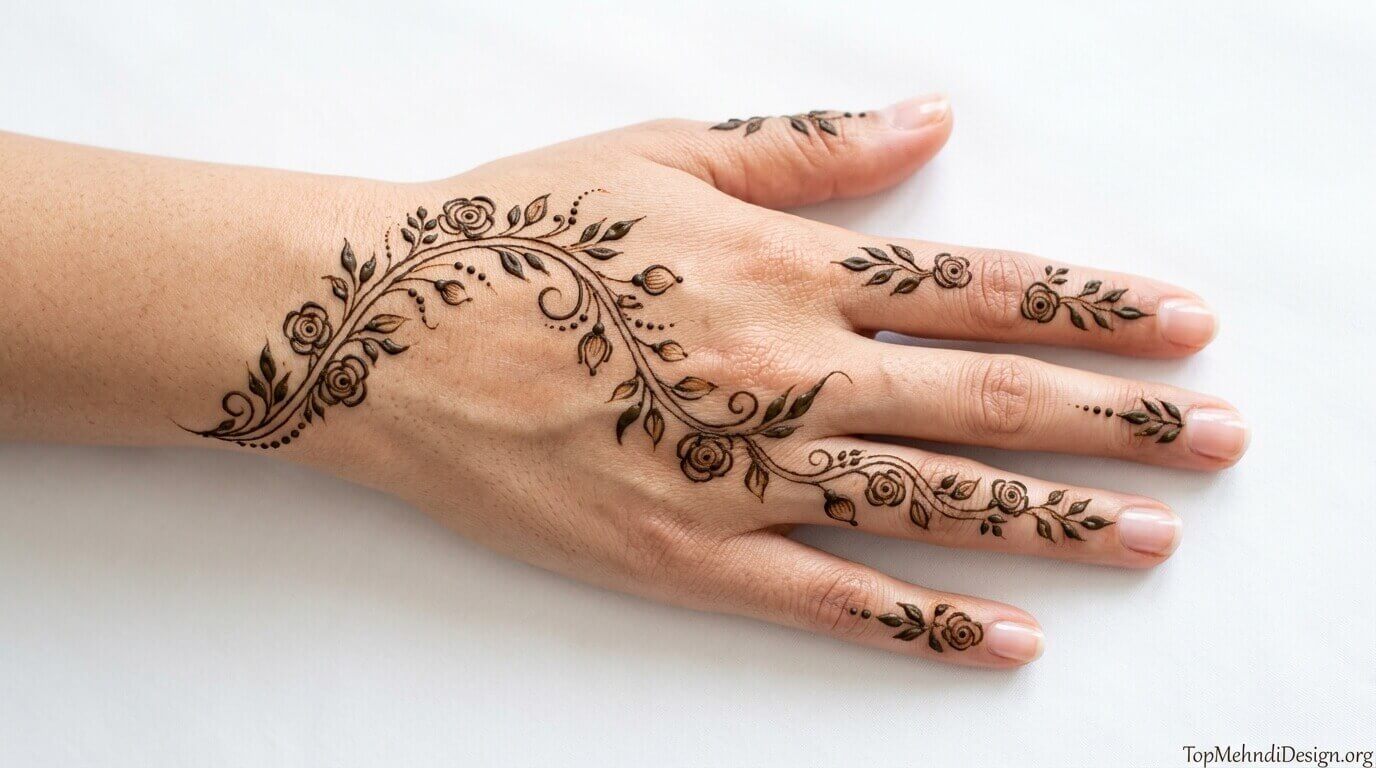
- Vine with flowers: Single vine trail with two or three simple flowers attached
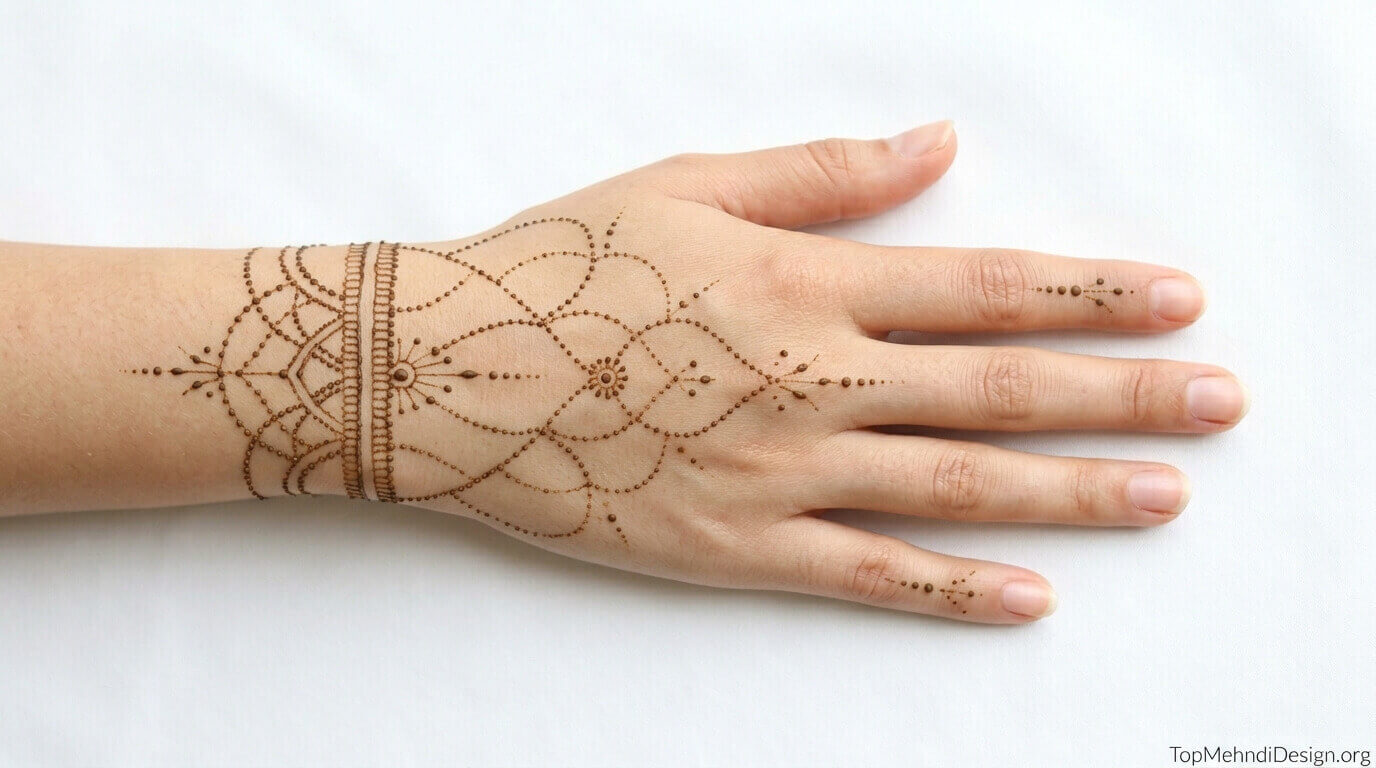
- Bracelet with pendant: Dot wrist band with a small crescent moon hanging from the center
- Arabic leaf trio: Three large Arabic leaves arranged diagonally across the back of the hand
- Simple mandala: Small four-petal flower with a dot ring, applied to the wrist center
- Finger vine design: Simple vine with leaves trailing up the index and middle fingers
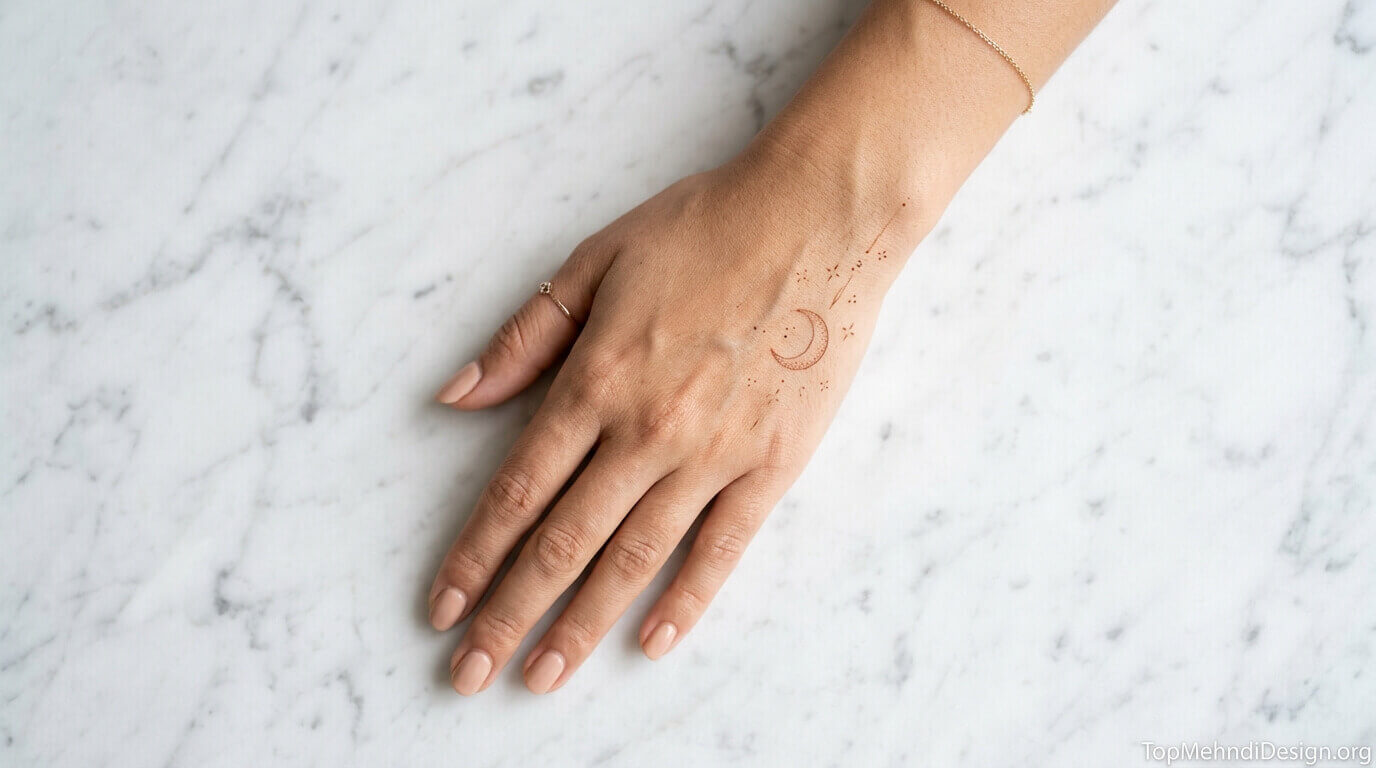
- Moon and stars composition: Crescent moon with 5 small star accents on the back hand
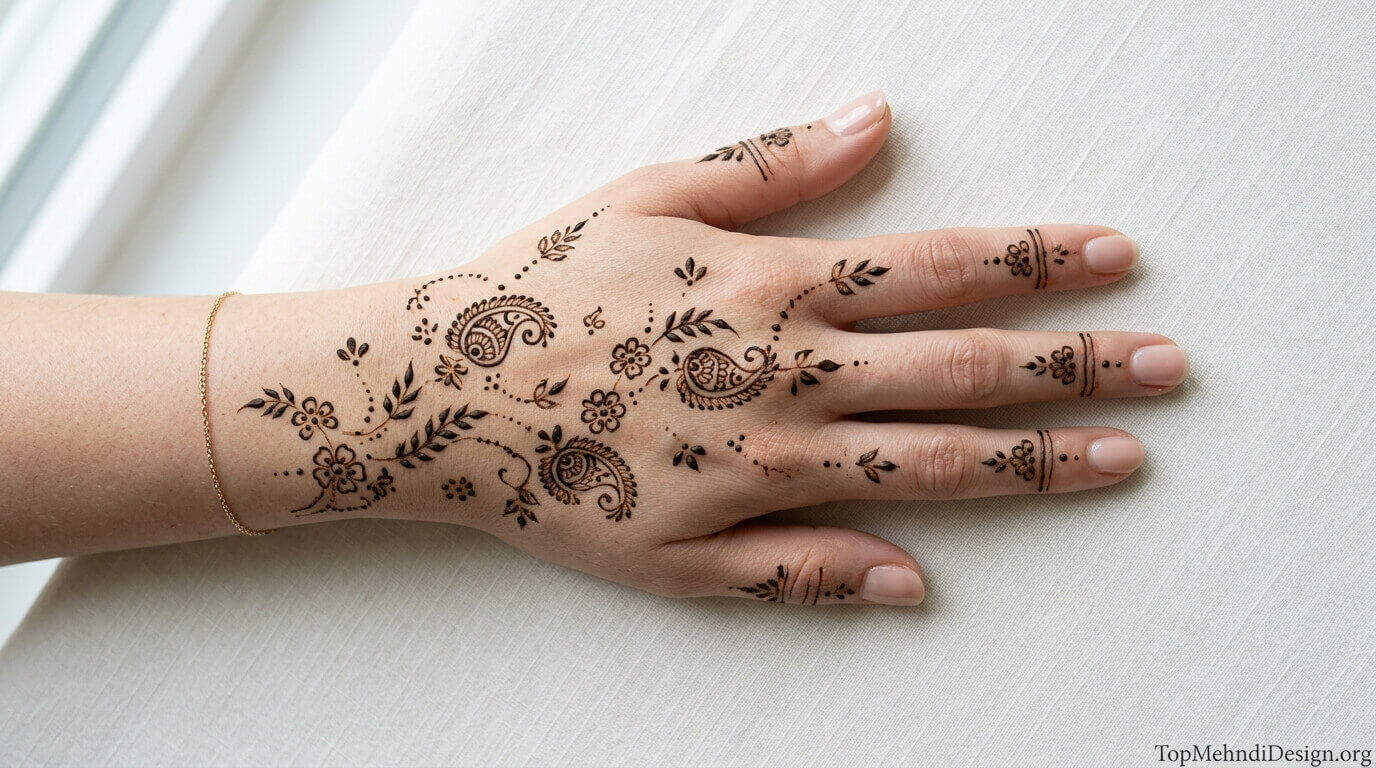
- Paisley single: One large paisley with a thin dot border on the palm center
- Geometric band: Simple diamond repeating pattern around wrist
Confident Beginner Designs (25 to 40 Minutes)
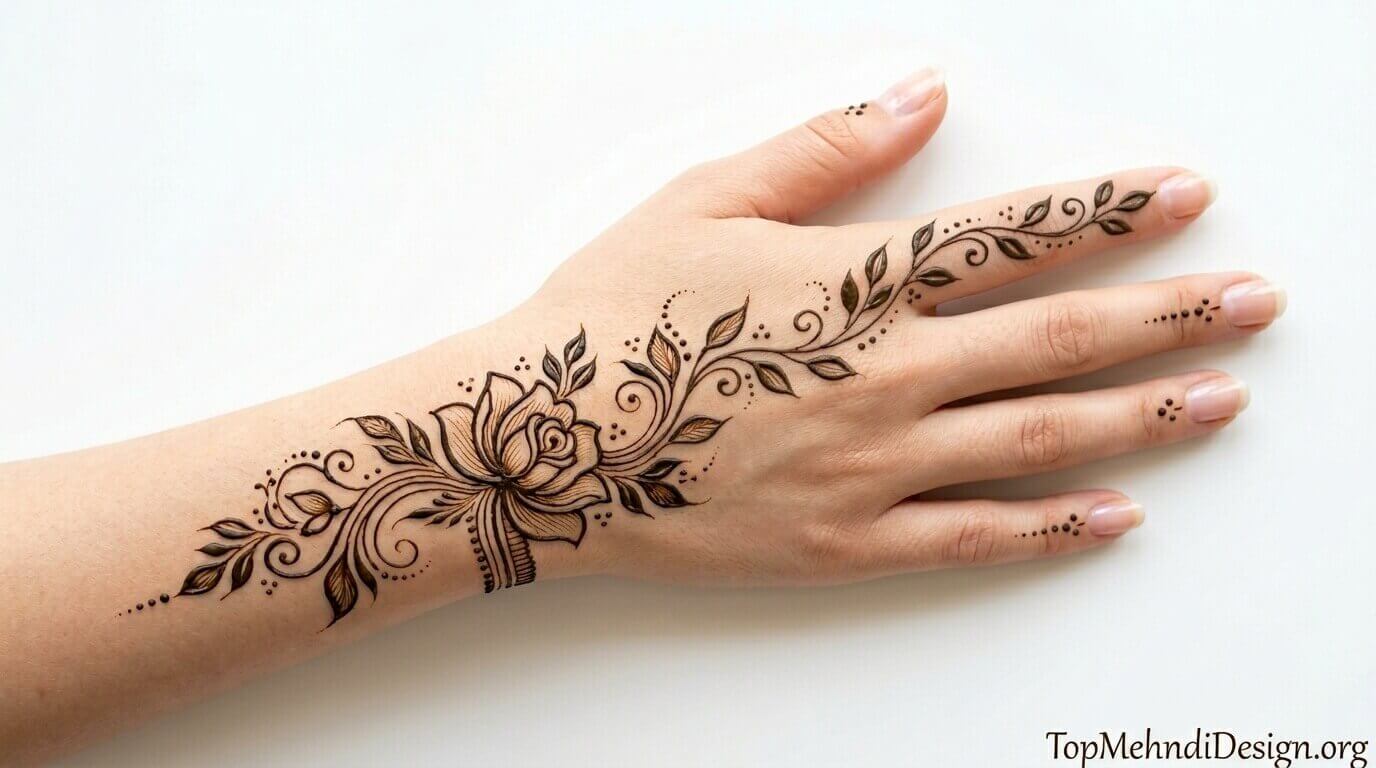
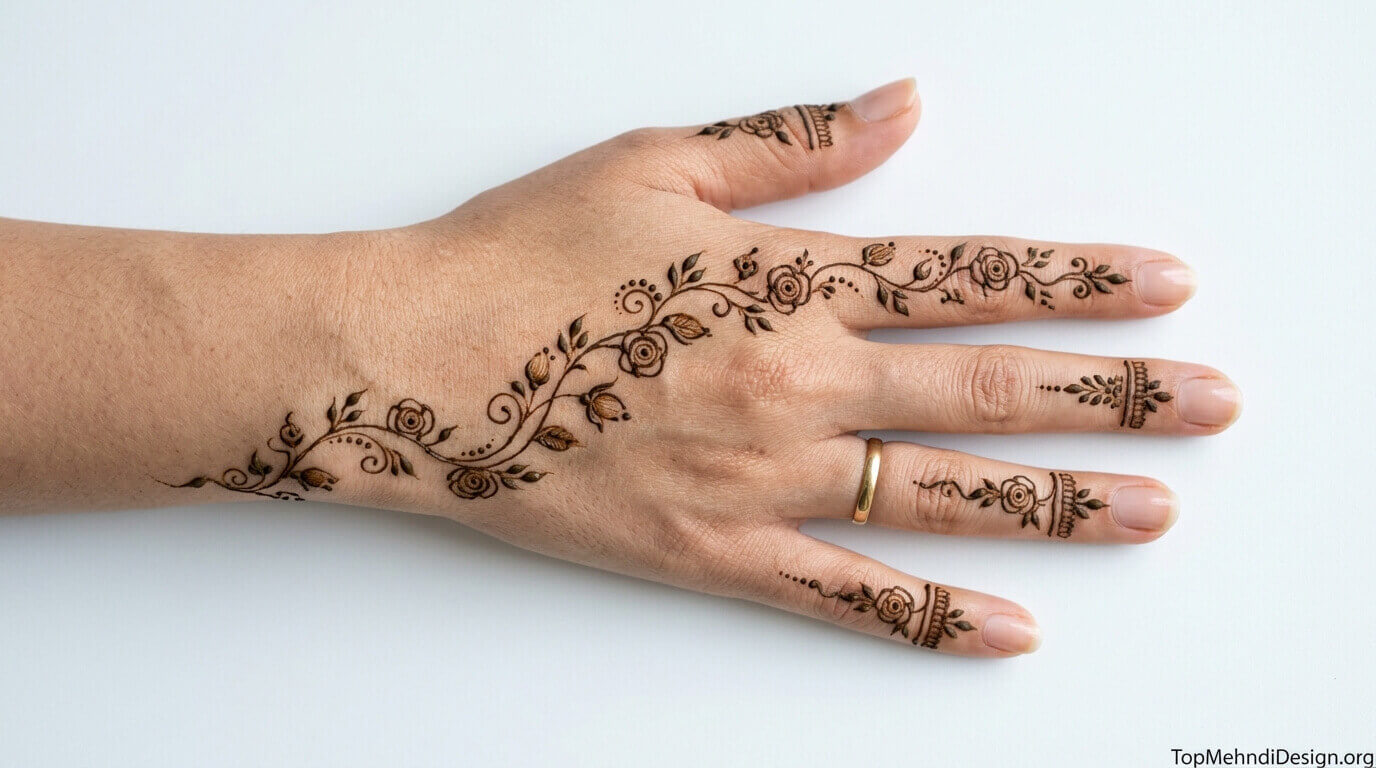
- Vine bracelet with flower pendant: Wrist vine connecting to a rose charm
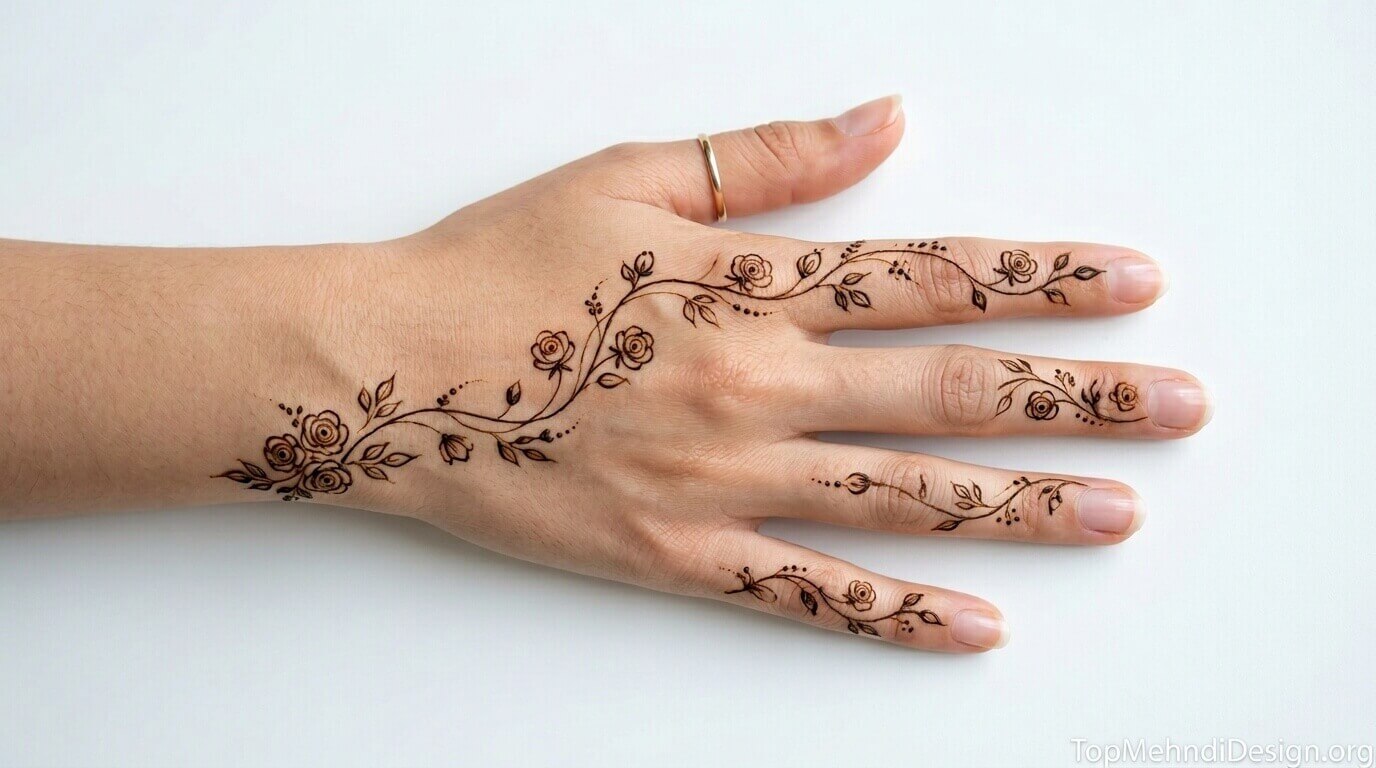
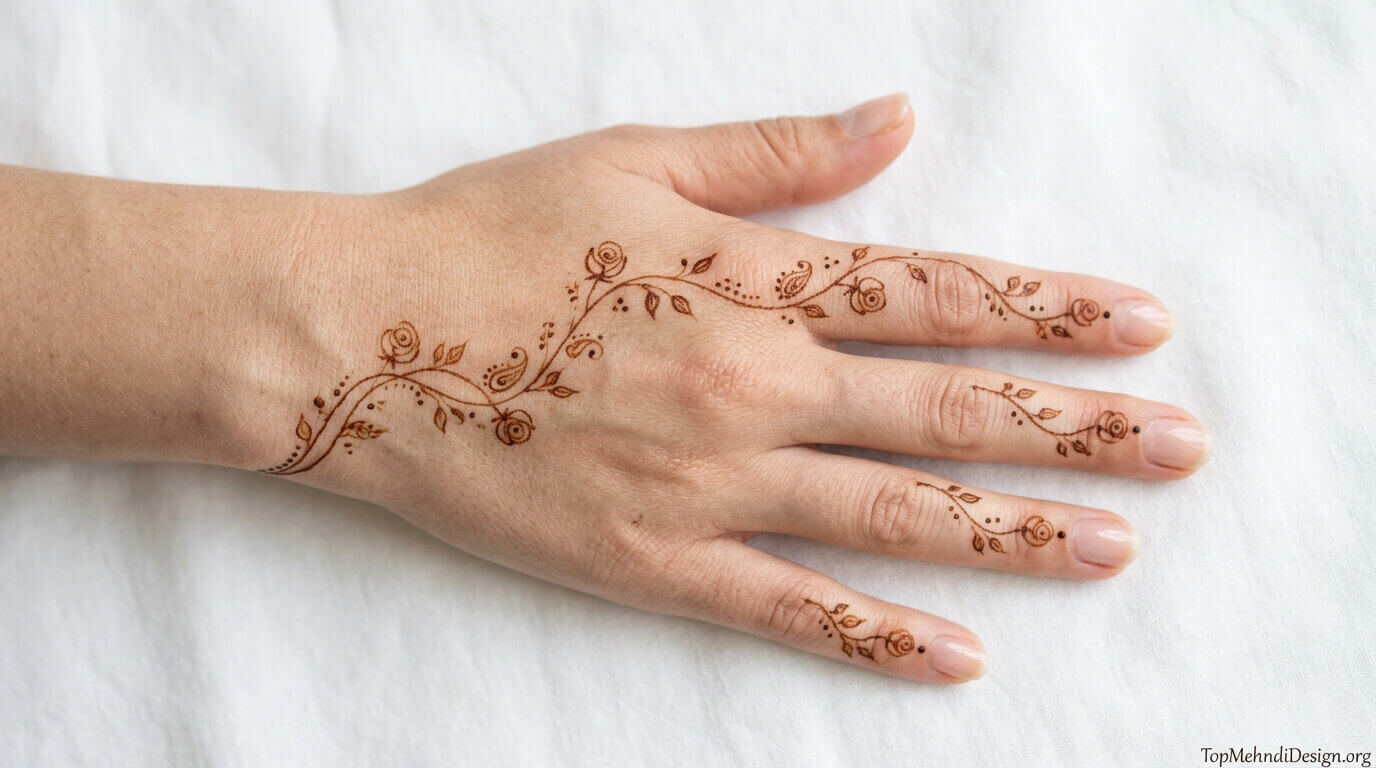
- Backhand Arabic trail: Diagonal vine with two roses and leaf accents
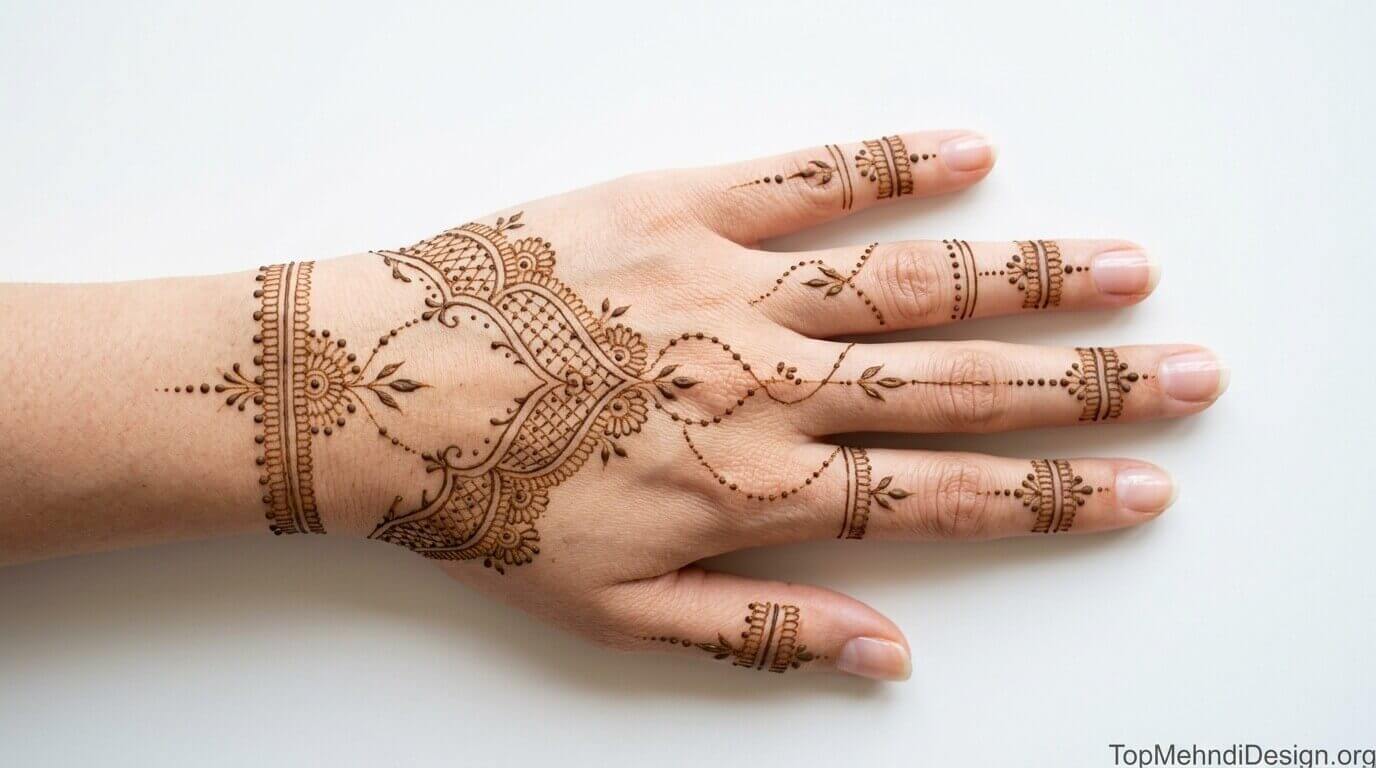
- Simple haath phool: Wrist band connecting to one finger ring via a thin chain
- Multi-finger vine: Simple vine design extending across three fingers
- Lotus and vine composition: Central lotus with trailing vine extensions
- Arabic mandala khafif: Small mandala on the back of the hand with minimal petal border
- Crescent moon with vine trail: Moon motif with vine trailing toward wrist
- Layered leaf design: Three layers of graduated leaves creating depth without filling
Step by Step: How to Draw Khafif Mehndi for Beginners
This beginner-friendly step-by-step guide covers the single vine trail, the easiest and most beautiful Khafif Mehndi Design for Beginners 2026. Perfect for your very first henna attempt.
Beginner Khafif Single Arabic Vine Design:
- Prepare: Wash hands thoroughly, dry completely, and remove all oil and lotion from skin.
- Practice on paper first: Draw ten flowing vine lines on paper using your cone. Practice keeping pressure consistent and lines smooth. Paper practice costs nothing and builds essential hand confidence.
- Mark’s starting point: Your vine will start just above the wrist on the back of the hand. This is the most visible and most photographed area.
- Draw the main vine: Apply gentle, even pressure to the cone and draw one smooth, flowing, curved line from the wrist toward the middle finger. Do not rush. Let the line flow naturally with the hand’s contour.
- Add small leaves: On both sides of the vine, draw small teardrop-shaped leaves alternating left and right. Each leaf requires only one or two small strokes. Keep leaves small and similar in size.
- Add a flower (optional): At the wrist end of the vine, draw one simple Arabic rose with five overlapping teardrop petals arranged in a circle. The rose becomes the beautiful focal point of the design.
- Add dot accents: Place small dots near the leaves and rose to fill any awkward spaces and create a sense of intentional completion. Dots are a beginner’s best friend; they fill gaps perfectly.
- Let dry and seal: Wait 20 minutes. Apply lemon-sugar. Leave 6 to 8 hours for a beautiful dark color.
💡 Most Important Beginner Tip: Practice pressure control above everything else. Too much pressure creates thick blobs. Too little creates broken lines. Practice on paper until your cone produces a consistent, thin line naturally, then apply to skin!
3-Day Beginner Practice Plan for Khafif Mehndi
1-Day Paper Practice
Draw vines, leaves, flowers, and simple geometric shapes on plain white paper using your henna cone.
Focus entirely on consistent cone pressure and smooth flowing lines. Draw each shape at least 20 times. Do not apply to the skin yet. Paper practice is the fastest way to build hand confidence without wasting henna.
2-Day Forearm Practice
Apply simple khafif designs to your forearm, a location where mistakes are less visible. Try a single vine with leaves, a simple bracelet, and one Arabic rose.
Observe how henna stains, how color develops over hours, and how different pressures create different line thicknesses. Photograph the results.
3-Day Hand Application
Now apply your Khafif Mehndi Design for Beginners 2026 to the back of your hand or wrist. Use everything you learned from Days 1 and 2.
Start with the simplest design in your repertoire. Remember: slow and steady creates better results than a rushed application. Your beginner khafif will look beautiful.
Khafif Mehndi Design for Beginners Eid Special
Khafif Mehndi Design for Beginners 2026 is the absolute best Eid choice for anyone who is new to henna or who has limited time on Chand Raat.
The designs apply in 15 to 25 minutes, dry quickly to reduce smudging risk, and look genuinely elegant and complete in every Eid photograph.
Best Beginner Khafif Designs for Eid
- Crescent moon wrist design: Small and meaningful, applies in 12 minutes
- Simple Arabic vine: One flowing vine from wrist to finger, elegant and quick
- Dot bracelet with moon: Simplest complete Eid look in under 10 minutes
- Star scatter design: Small stars scattered across the back of the hand with connecting dots
- Single rose with leaves: Classic Arabic motif, applies in 15 minutes, always beautiful
Conclusion
Khafif Mehndi Design for Beginners 2026 is the most beautiful, most forgiving, and most rewarding starting point in henna art.
Its light, elegant aesthetic produces genuinely stunning results from the very first attempt, building confidence and love for the art with every design you create. Begin with a single vine trail today. Then progress to a simple bracelet.
Then add a rose. Within three days of practice, you will be creating Khafif Mehndi Design for Beginners 2026 that look truly professional. Your journey into the beautiful world of mehndi art starts here, with one perfect thin line.
FAQs
1. Can a complete beginner do a khafif mehndi design?
Yes! Khafif Mehndi design is specifically the best style for complete beginners. The minimal elements, thin lines, and open spacing mean that small mistakes are barely visible, and the design always looks intentionally elegant. Start with a single vine trail and build confidence from there.
2. What tools do I need for khafif mehndi?
You need only one fresh henna cone with a fine tip. A fine-tipped cone is essential for khafif mehndi because the style depends on thin, precise lines. A medium or large tip creates lines too thick for the delicate khafif aesthetic. Also, prepare a lemon-sugar mixture for sealing after application.
3. How is khafif different from regular mehndi?
Regular Pakistani or Indian mehndi fills every inch of the hand with dense patterns. Khafif mehndi leaves generous space between elements, using thin lines and minimal motifs. This creates a light, modern, breathable design rather than a heavy traditional coverage. Khafif photographs more cleanly and applies much faster.
4. How long does khafif mehndi last?
Khafif mehndi typically lasts 8 to 12 days with proper aftercare. Light designs may appear to fade slightly faster than dense traditional mehndi because there is less overall coverage. Apply coconut oil daily and avoid harsh soaps to protect and extend the stain’s beautiful appearance.
5. What are common beginner mistakes in khafif mehndi?
The most common beginner mistakes are applying too much pressure (creating thick blobs instead of thin lines), rushing the application, overcrowding the design with too many elements (defeating the khafif aesthetic), and applying on oily skin. Clean skin, slow application, and consistent, gentle pressure solve all these issues immediately.