
Introduction
Teej Mehndi Design for Beginners 2026 is the most joyful, most encouraging, and most genuinely achievable entry point into the beautiful world of festival henna art.
Teej, the sacred monsoon festival of love, devotion, and the eternal bond between Lord Shiva and Goddess Parvati, is celebrated every August with green bangles, traditional red clothing, and the most meaningful mehndi applications of the entire monsoon season.
For women who have never applied mehndi before, who are learning for the first time, or who have tried and felt frustrated by complex patterns that seemed impossible to recreate, Teej Mehndi Design for Beginners 2026 is your most encouraging and most genuinely helpful guide.
The beautiful truth about Teej mehndi is that the most meaningful designs for this sacred festival are also among the simplest, most achievable, and most beginner-friendly patterns in all of mehndi art.
This is the most complete guide to Teej mehndi design for beginners 2026 60+ of the easiest, most beautiful, and most genuinely achievable patterns for every woman who wants gorgeous Teej mehndi hands regardless of experience level.
Why Teej is Perfect for Beginner Mehndi Practice
Simple Motifs Carry Deep Meaning
Teej Mehndi’s most meaningful motifs, the crescent moon, the lotus flower, and the simple karwa pot, are also its most beginner-friendly shapes. A simple crescent outline takes 5 minutes to draw and carries the most sacred Teej symbolism.
A basic lotus shape takes 10 minutes and looks genuinely beautiful. Teej tradition and beginner practicality align perfectly, making this festival the ideal occasion for first-time mehndi application.
August Timing is Perfect for Practice
Teej arrives in August, giving beginners who start practicing in May, June, or July a full 2 to 3 months of practice time before the festival.
This preparation window is the most generous of any major festival. Eid rushes arrive within days, but Teej gives beginners the most comfortable and most encouraging practice timeline.
Forgiving Festival Style
Teej mehndi traditionally embraces a wide range of design complexity from simple wrist bracelets to elaborate full hand coverage.
No design is considered too simple for Teej as long as it is applied with devotion and love. This cultural acceptance makes Teej the most beginner-welcoming festival mehndi occasion of the entire year.
Easiest Teej Mehndi Designs for Beginners 2026 Step by Step
Design 1 Simple Crescent Moon Wrist
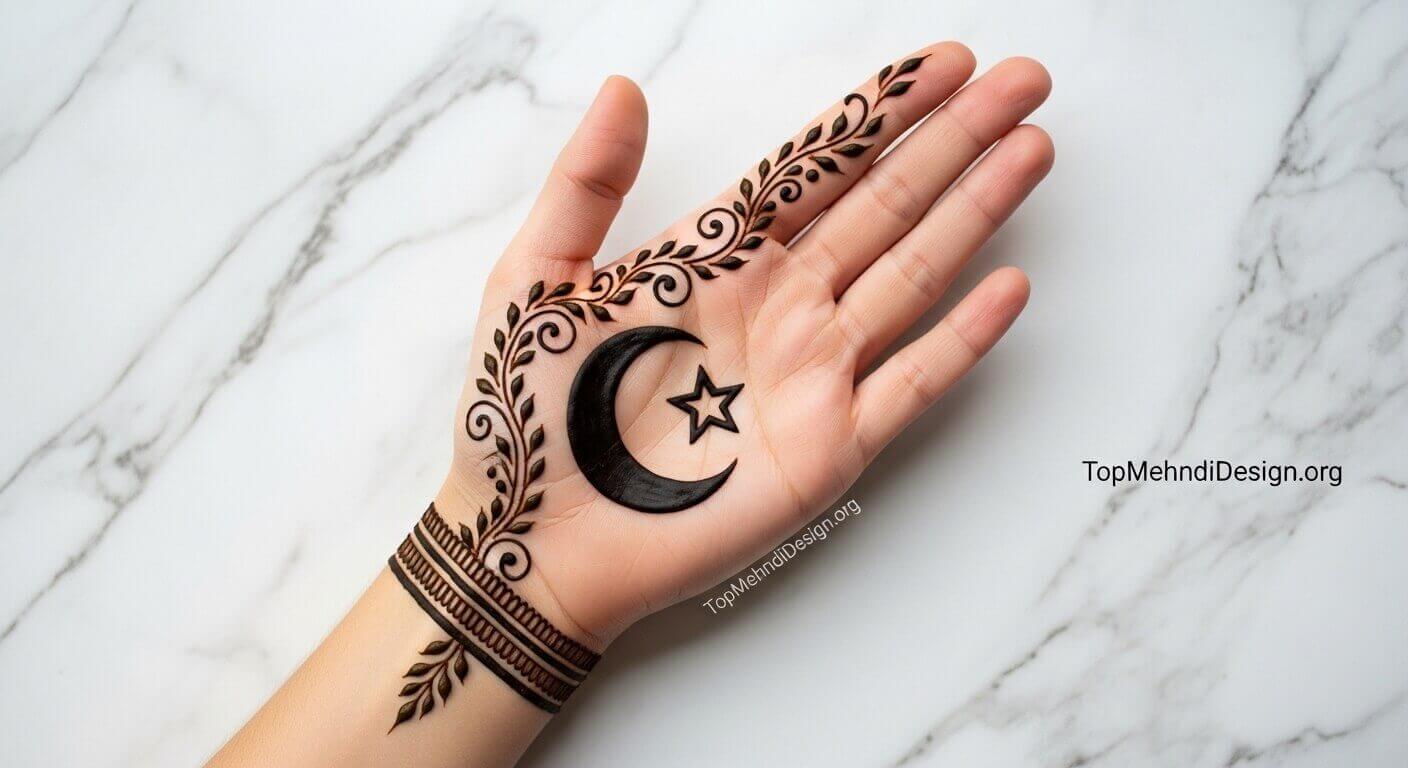
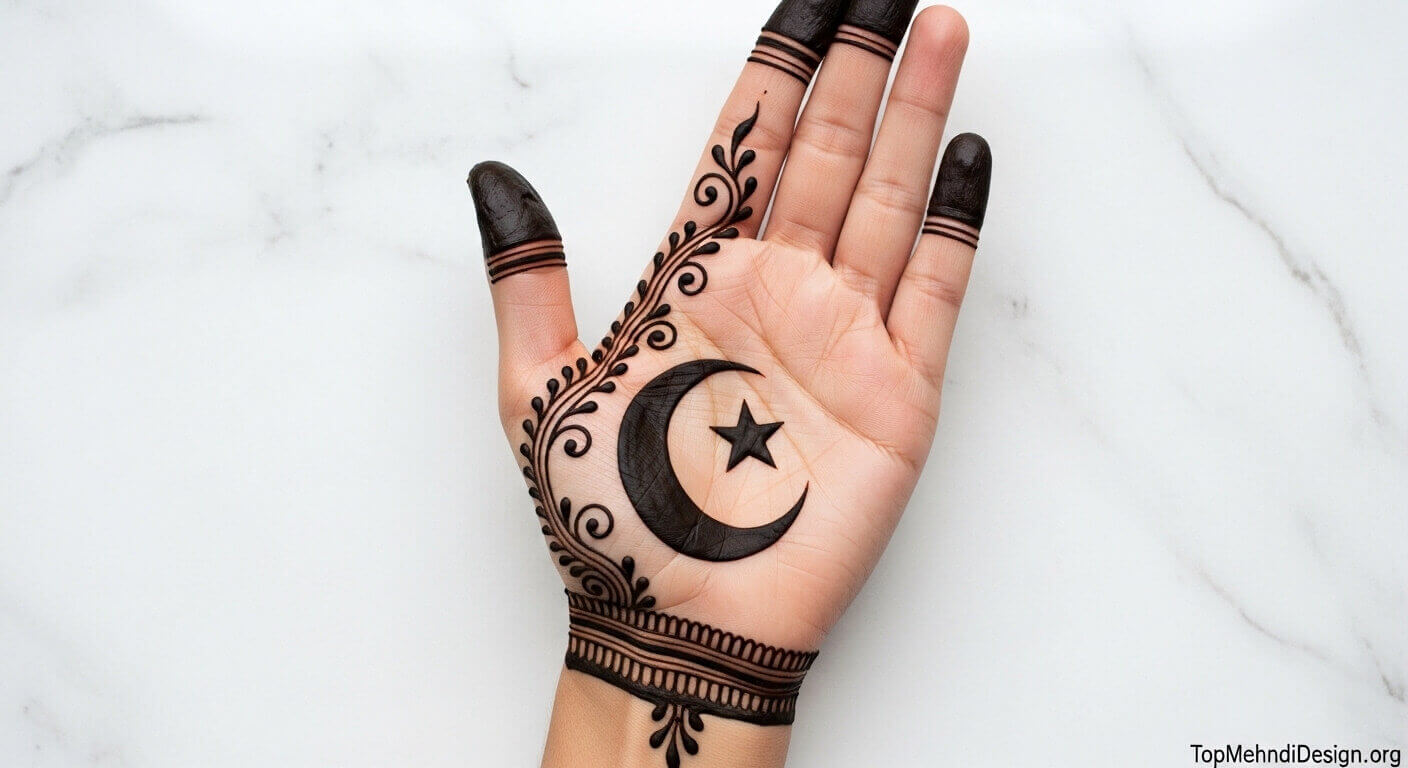
The easiest and most meaningful perfect Teej mehndi design for complete beginners. Draw a simple crescent moon outline at the wrist center. Add 3 to 5 small dot stars around it. Add two thin vine lines extending from each moon tip toward the palm.
Total application time: 10 minutes. This simple design carries the most sacred Teej symbolism; the moon you fast for, decorates your wrist throughout the entire sacred day.
How to draw: Hold the cone at 45 degrees. Draw the outer curved arc first, in one smooth, confident stroke. Draw the inner curved arc slightly shorter and tighter. Add small dots for stars. Add thin vine trails from moon tips.
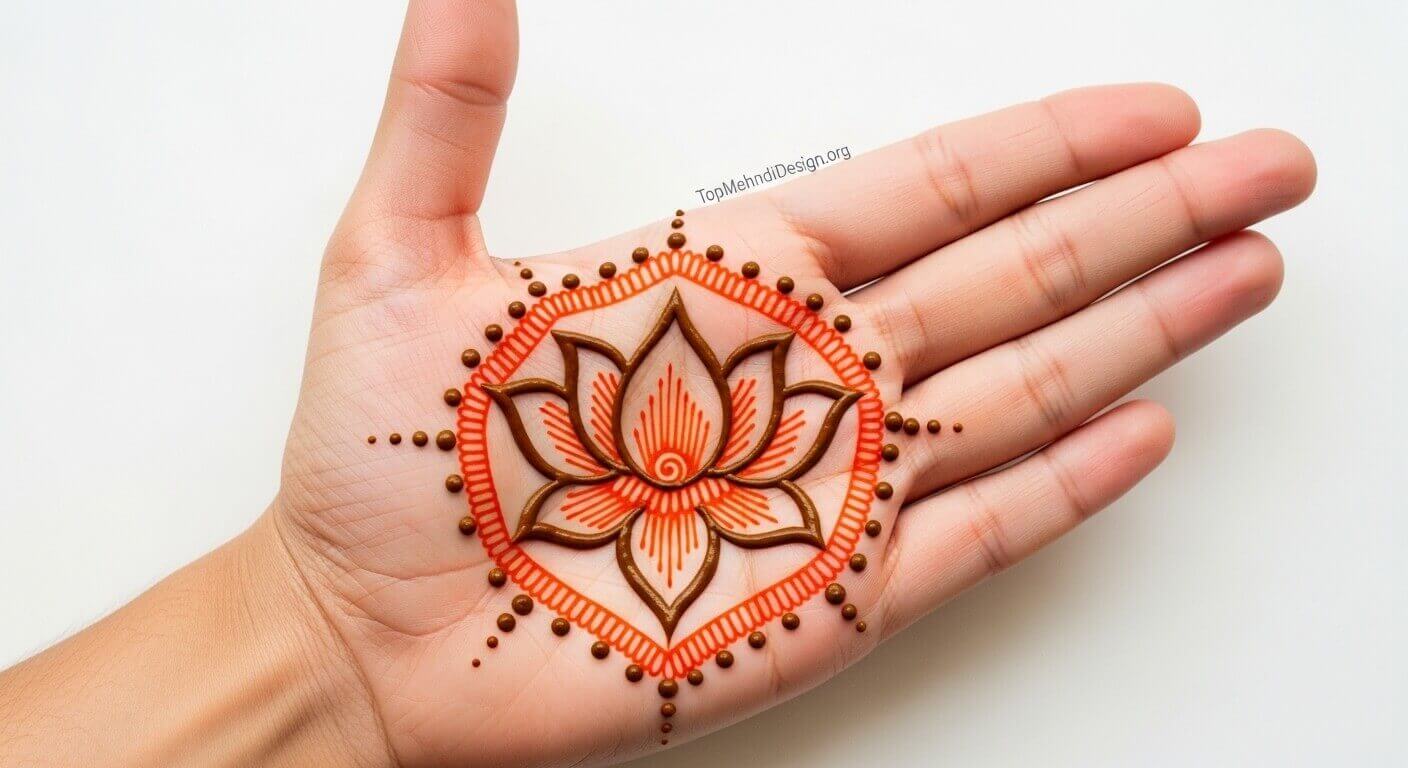
Design 2 Simple Lotus Palm
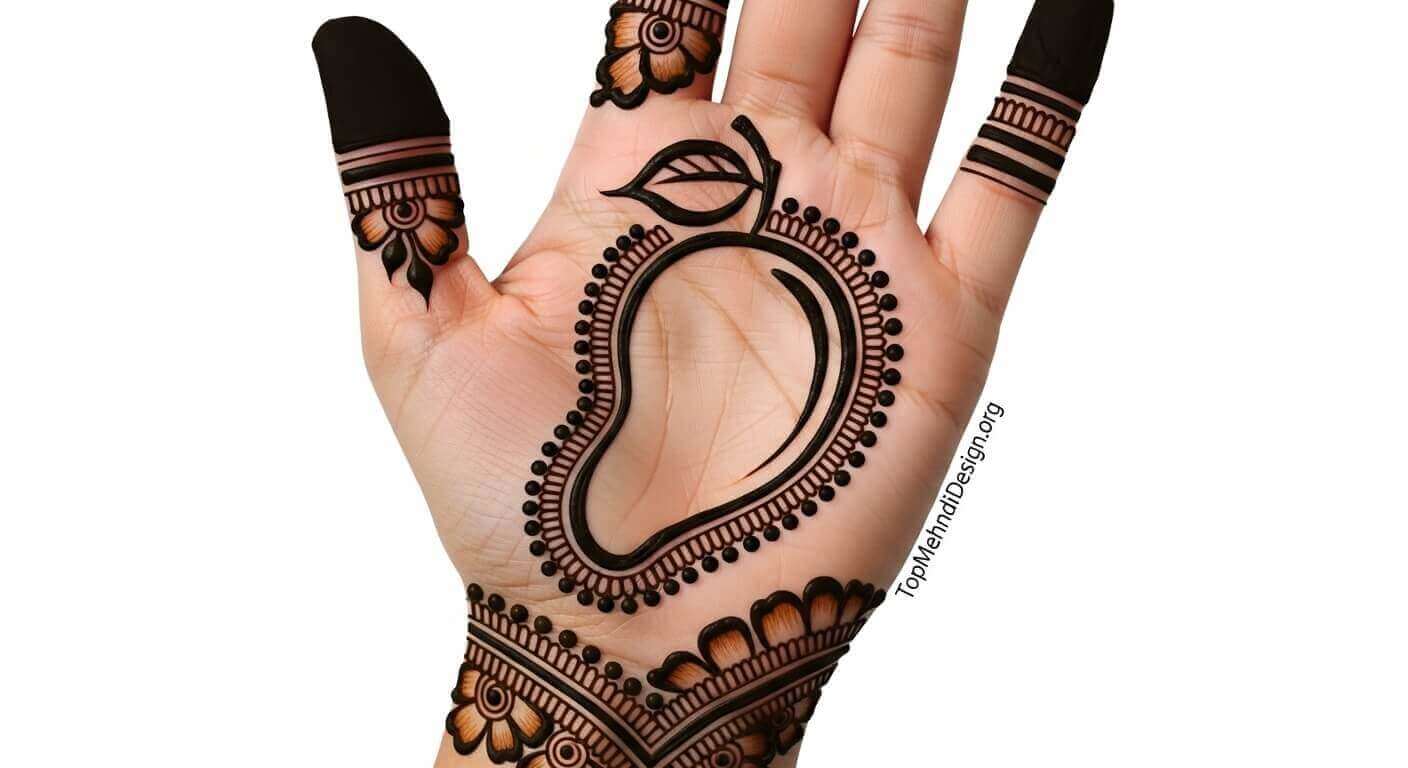
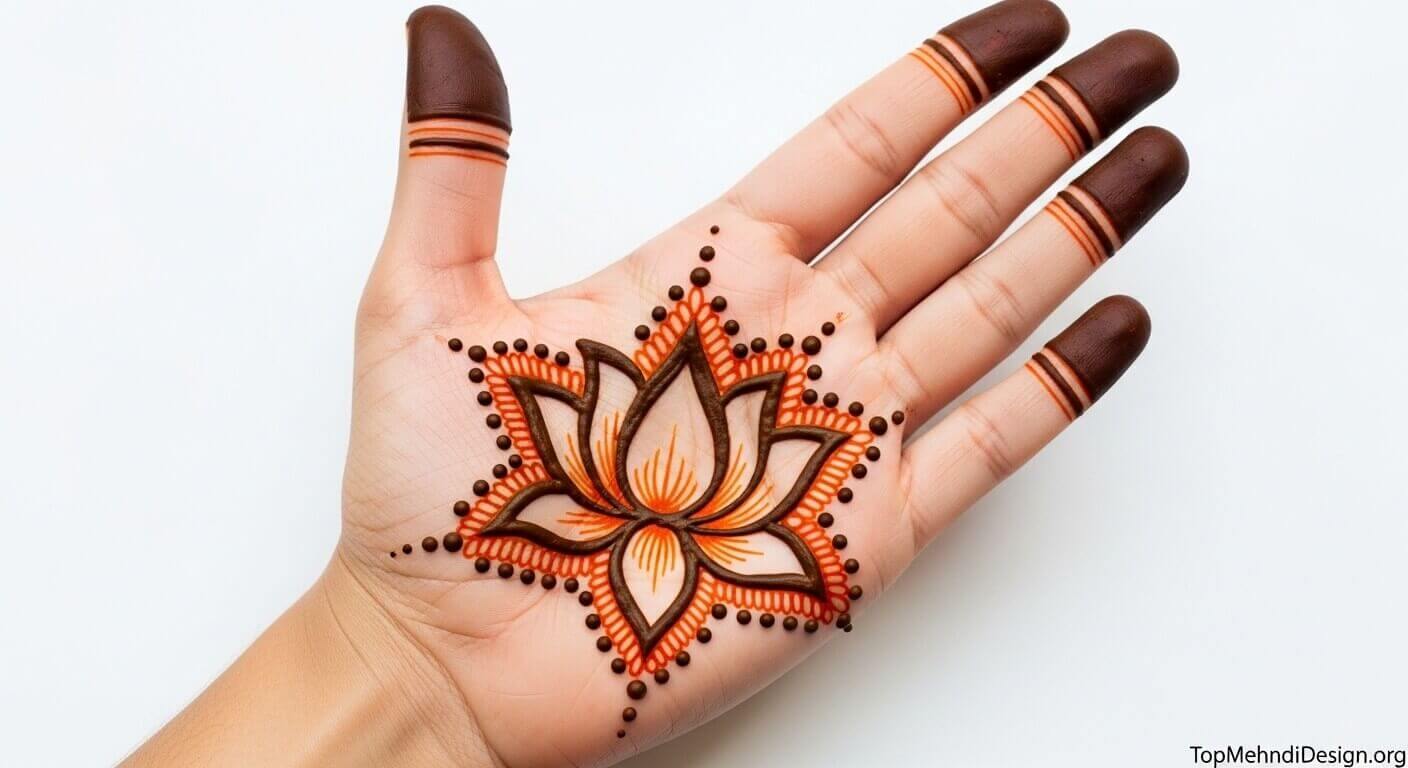
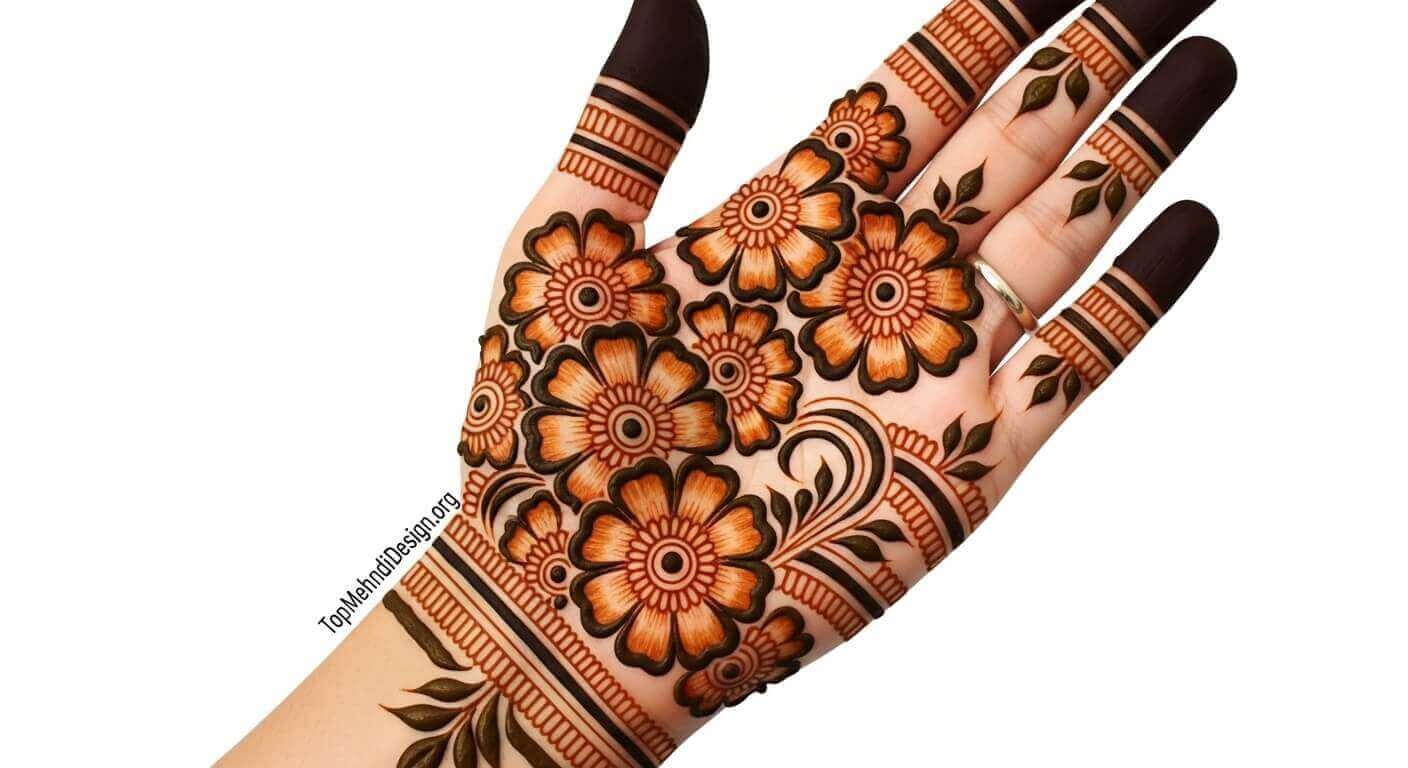
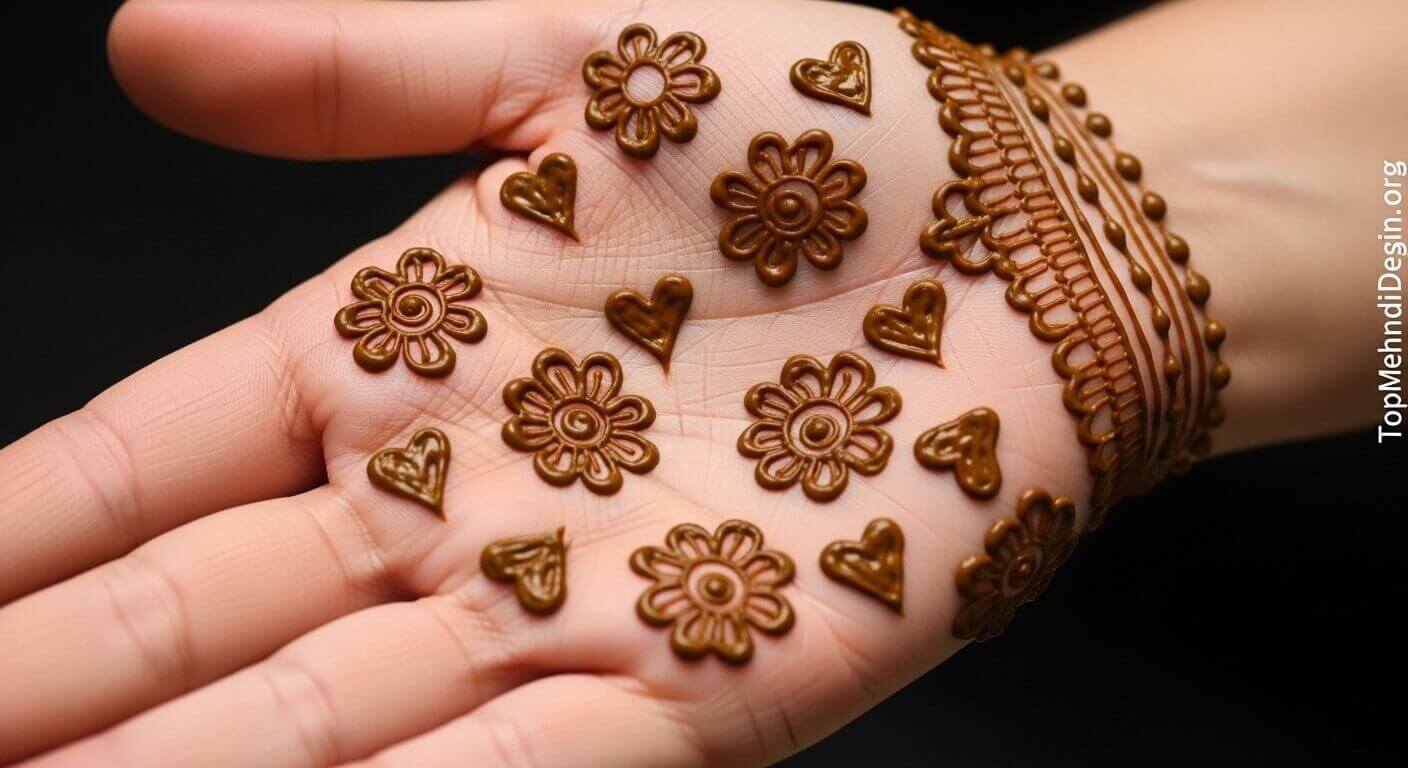
A basic lotus at the center of the palm. Draw 6 to 8 simple oval petals radiating outward from a small circle center. Add basic dot accents between petals. Total time 15 minutes. Beautiful, sacred, and completely achievable for every beginner.
How to draw: Start with a small circle at the palm’s exact center. Draw the first petal going straight up a simple pointed oval. Add petals at equal intervals around the center circle. Fill alternate petals with simple diagonal line hatching. Add dot accents at each petal tip.
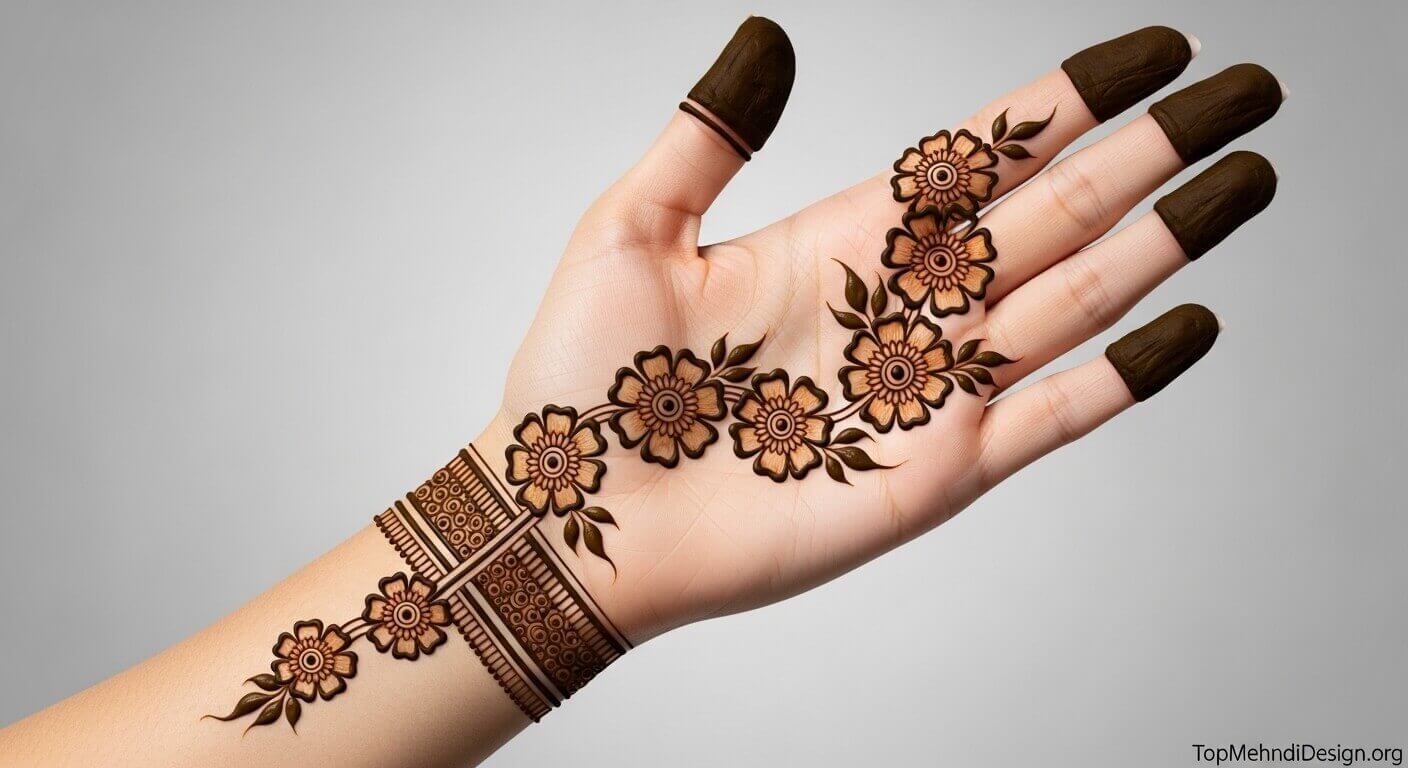
Design 3 Simple Wrist Bracelet
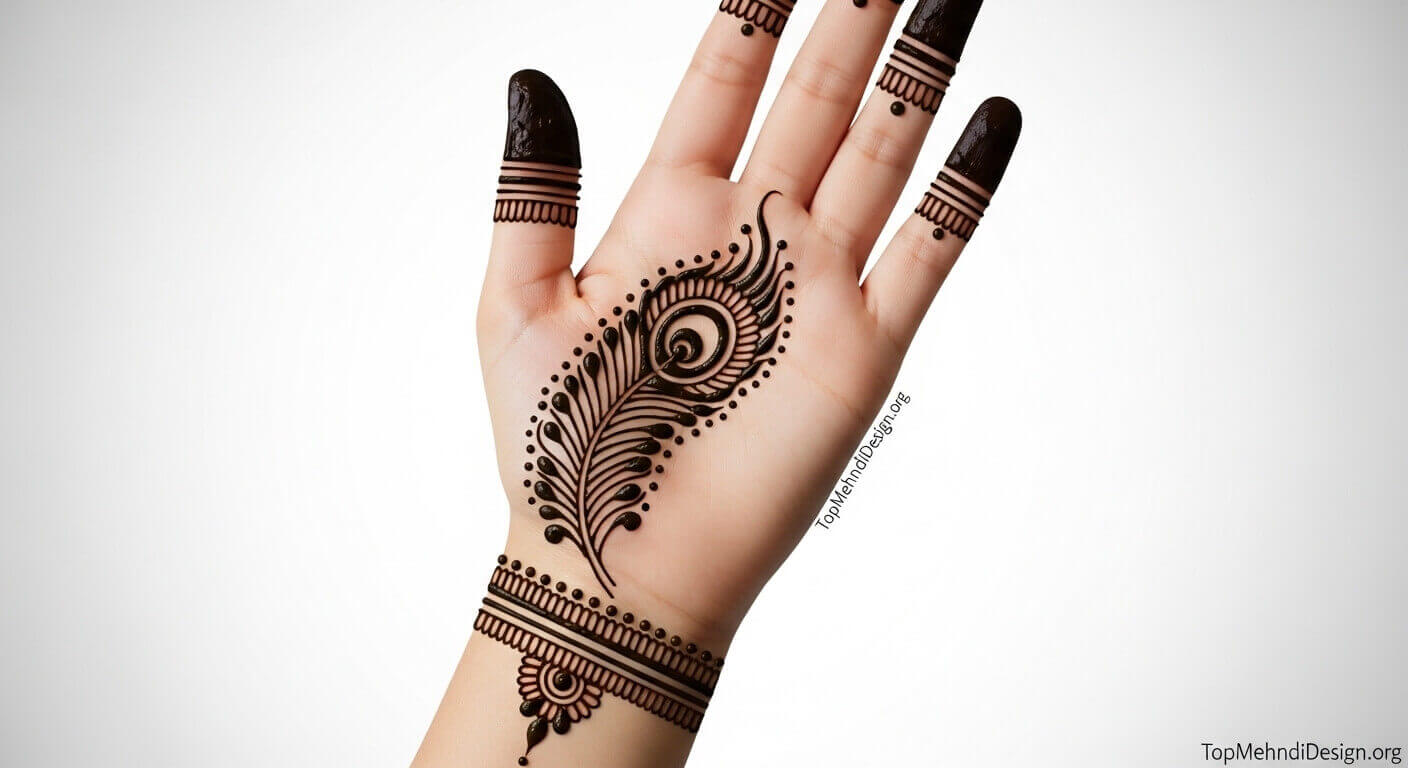
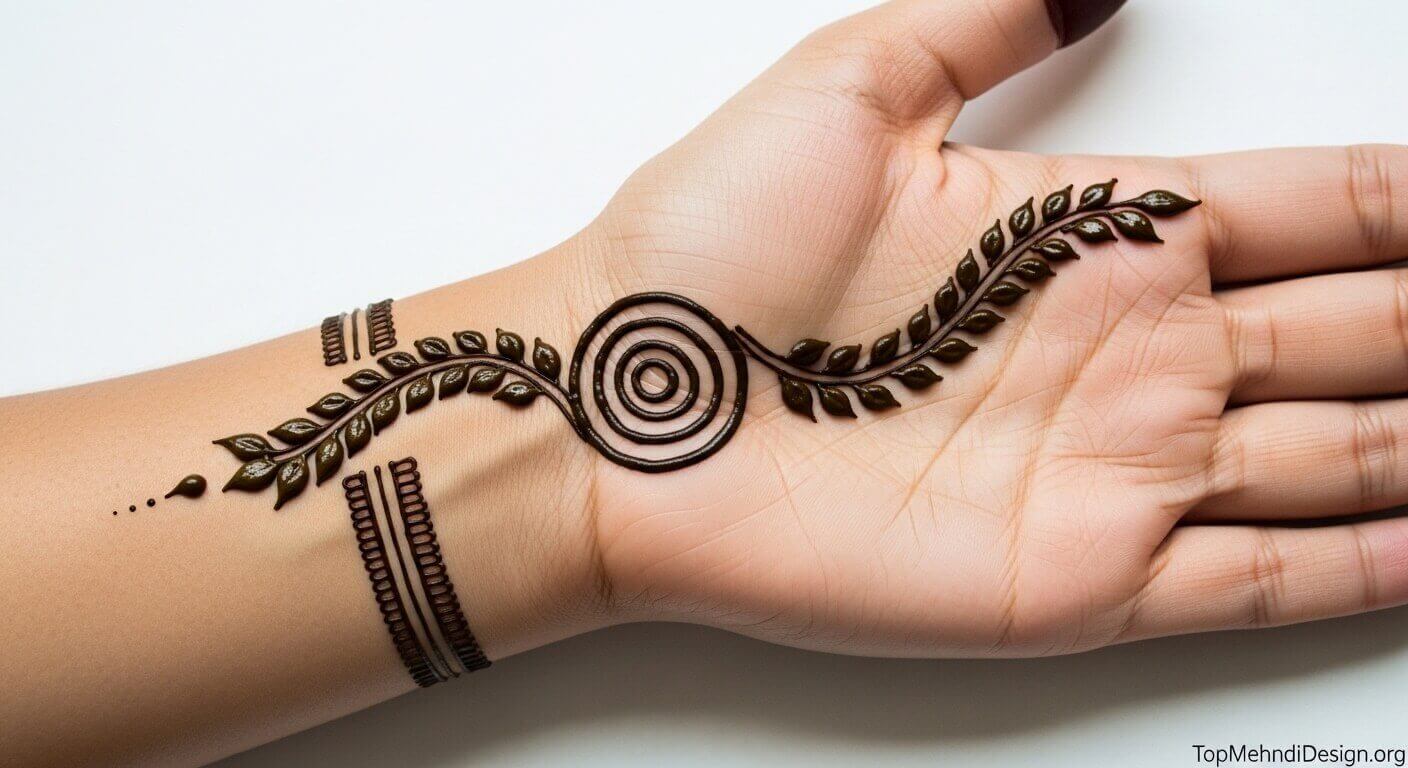
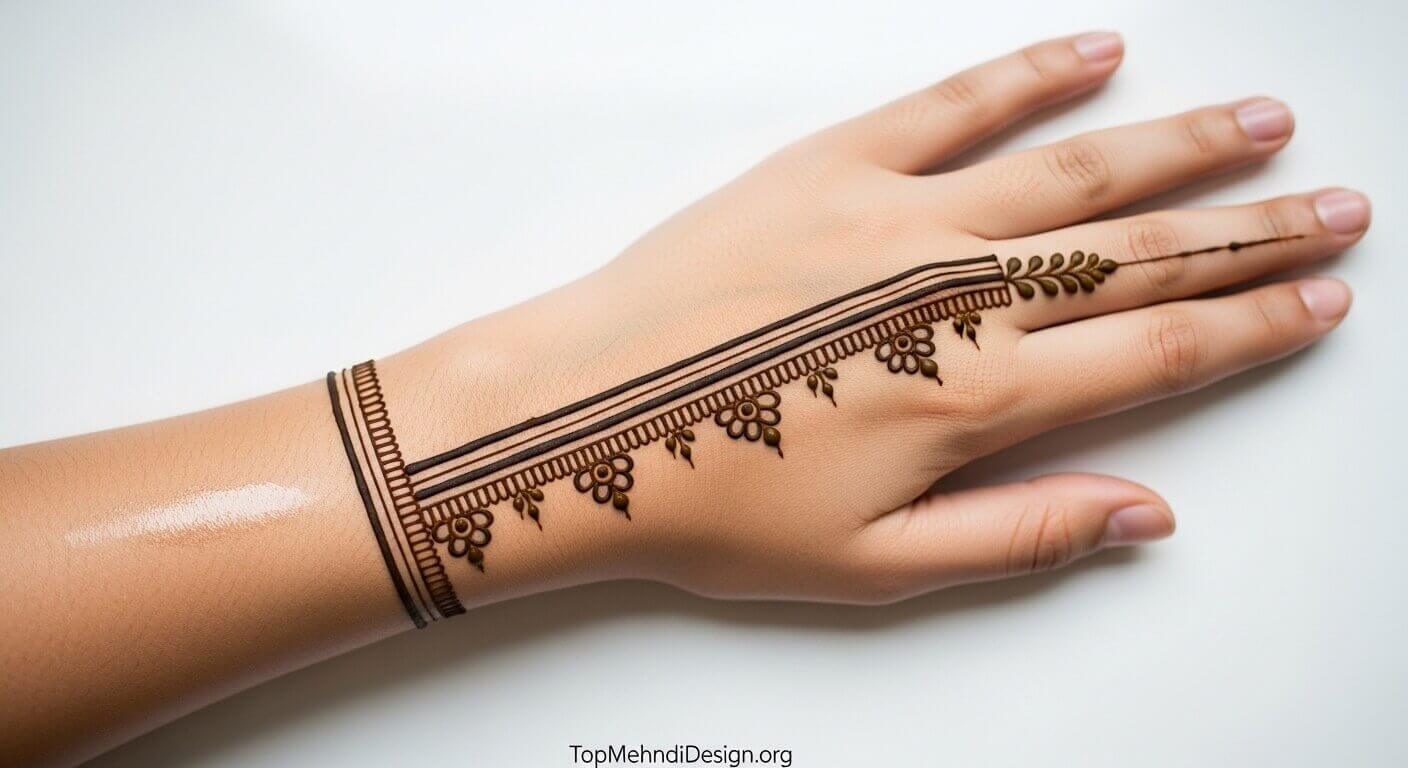
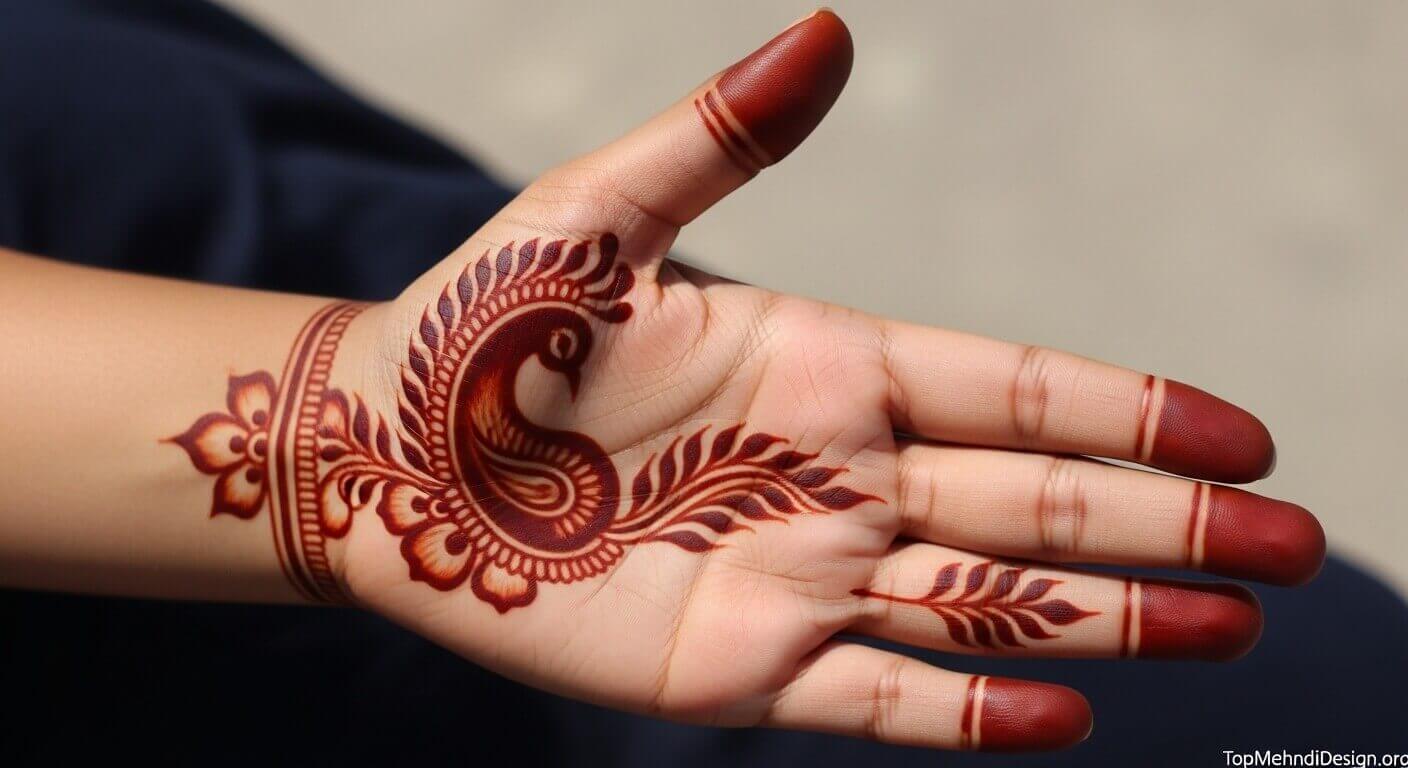
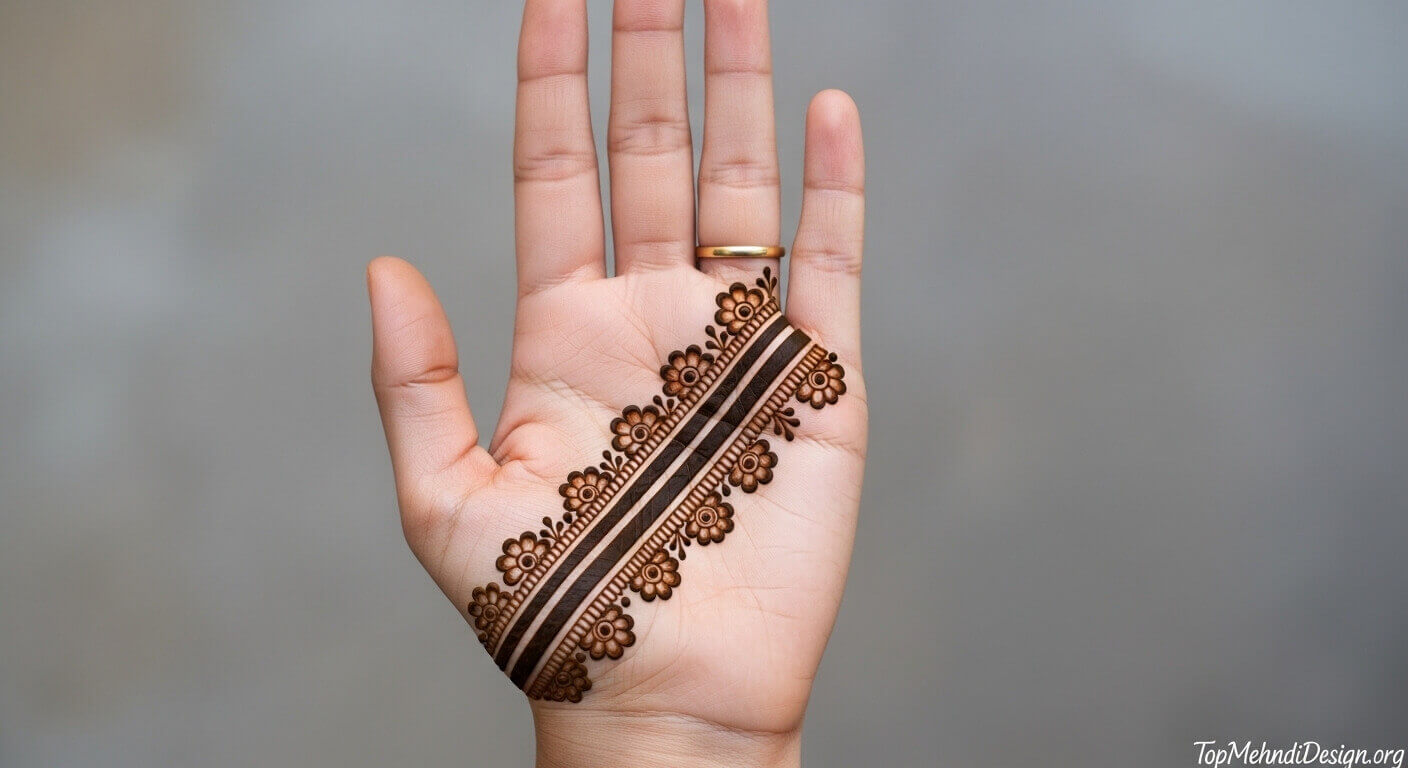
A thin continuous line bracelet around the wrist with basic flower dots at regular intervals. The most beautiful and beginner-friendly Teej Mehndi design. Total time 8 minutes.
How to draw: Draw one thin continuous line completely around the wrist. Add a simple 5-dot flower pattern at equal intervals along the bracelet line, one center dot surrounded by 4 outer dots. Connect bracelet flowers with thin leaf accents.
Design 4 Basic Finger Rings
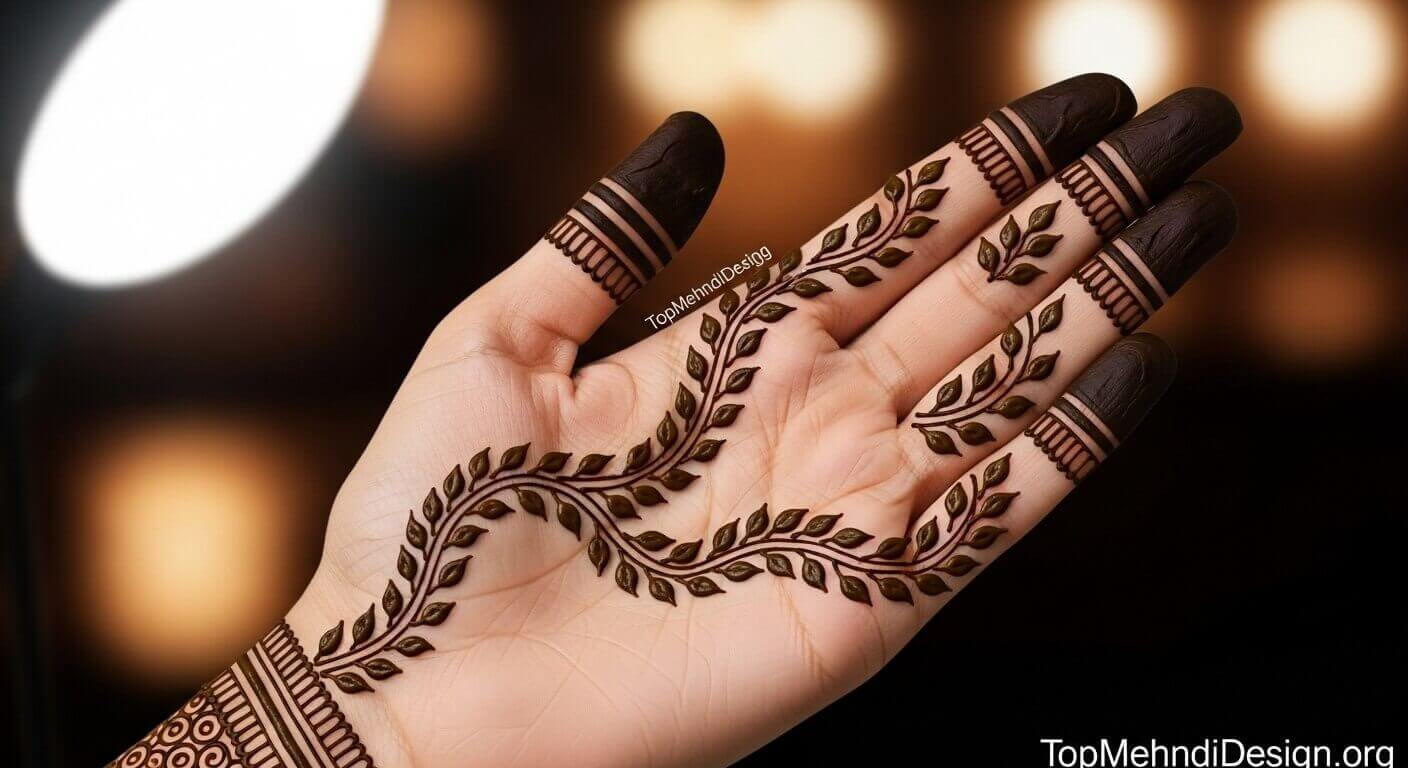
Simple ring patterns on each finger at different heights, with a thin line around each finger with a tiny leaf or dot accent.
Total time 12 minutes. Looks like delicate jewelry and is completely achievable in a first attempt.
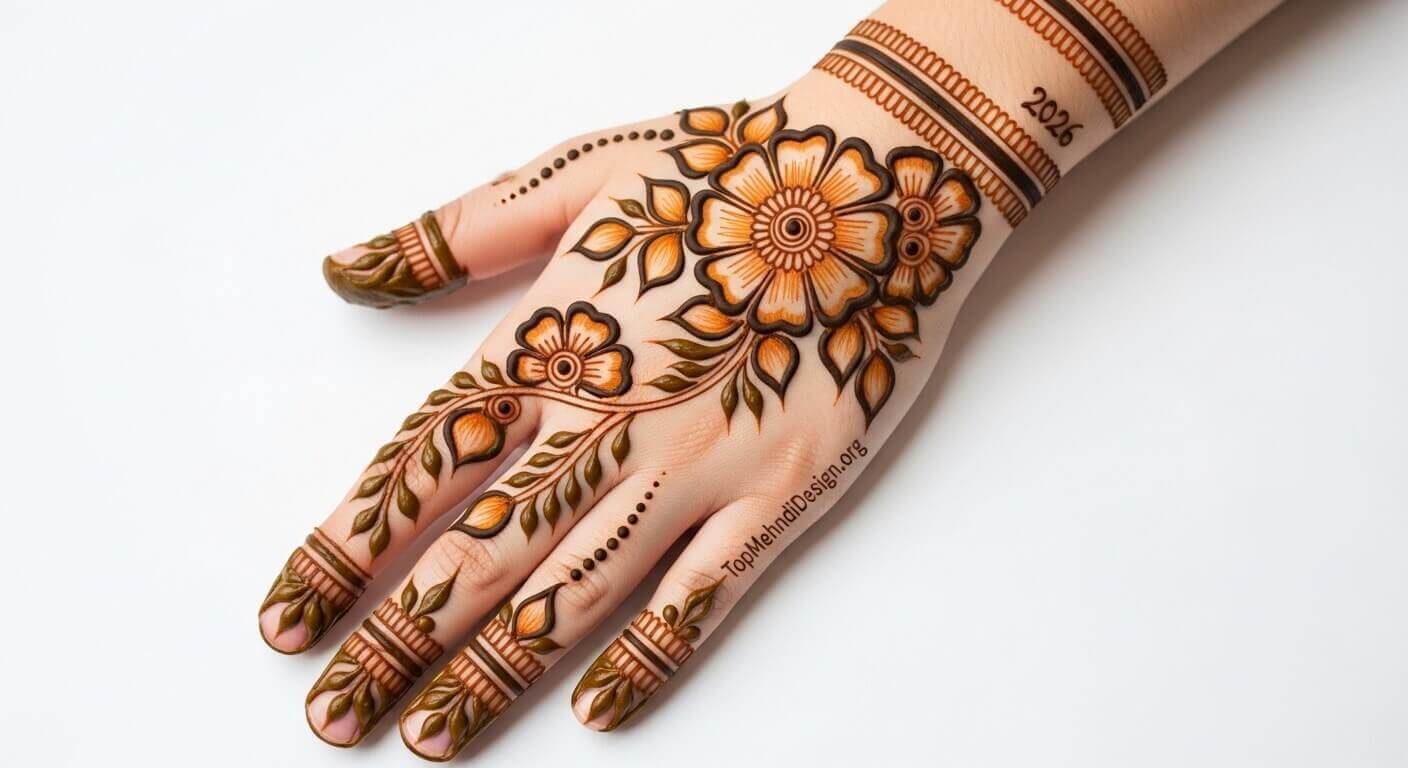
Design 5 Simple Floral Back Hand
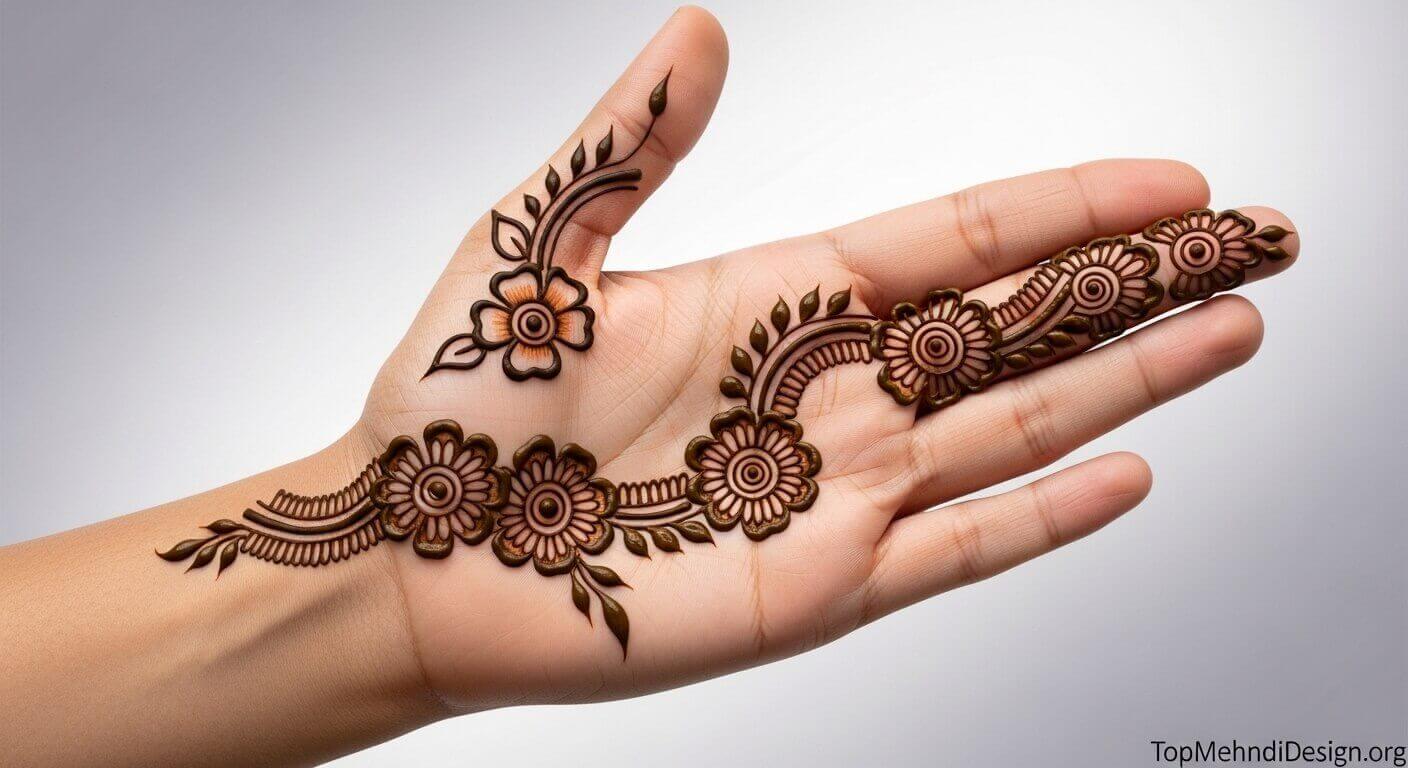
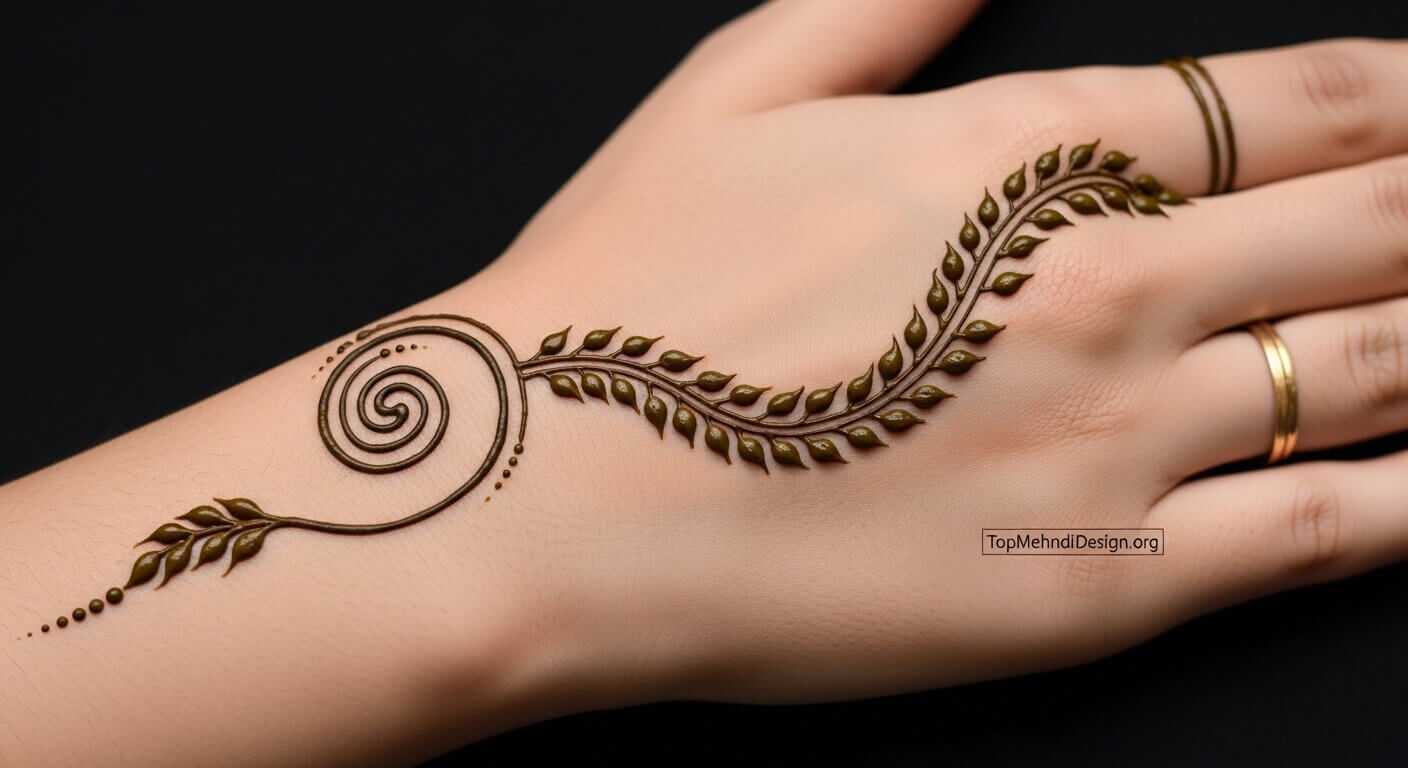
One large, simple flower at the back, centered with 8 basic petals and a center dot. Four thin vine lines extend from the flower toward each finger base. Total time 20 minutes. Simple, beautiful, and perfectly festive for Teej.
Easy Teej Mehndi Patterns for Beginners 2026 By Hand Position
Beginner Back Hand Teej Designs
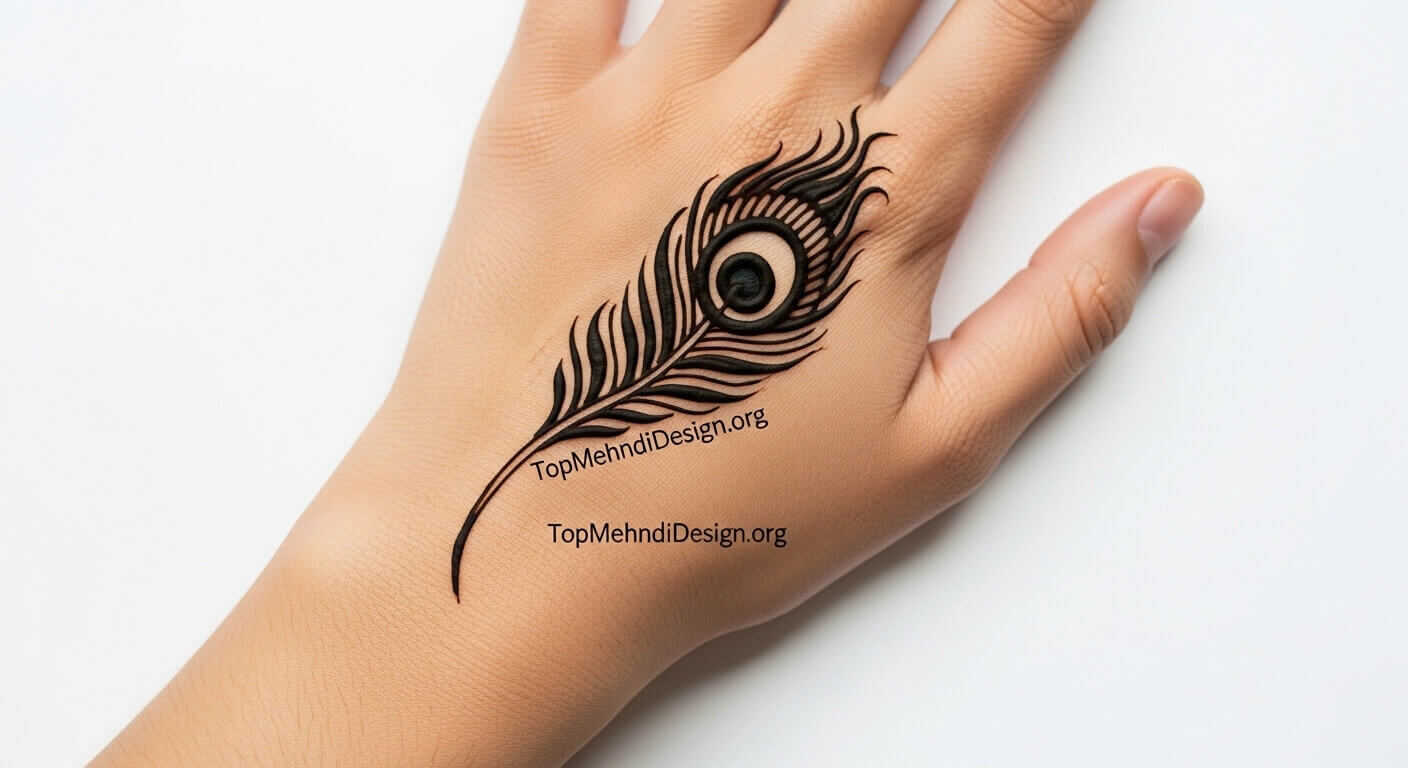
The back hand is the most forgiving surface for beginner mehndi. Skin texture is consistent, the surface is flat and stable, and any small imperfections in thin lines are naturally less visible than on the front palm.
Start your Teej backhand practice with the simple floral center design, adding basic vine extensions as your confidence grows.
Beginner Front Hand Teej Designs
Front hand mehndi stains darkest because palm skin absorbs henna most deeply, making even simple beginner designs look magnificently dark and beautiful.
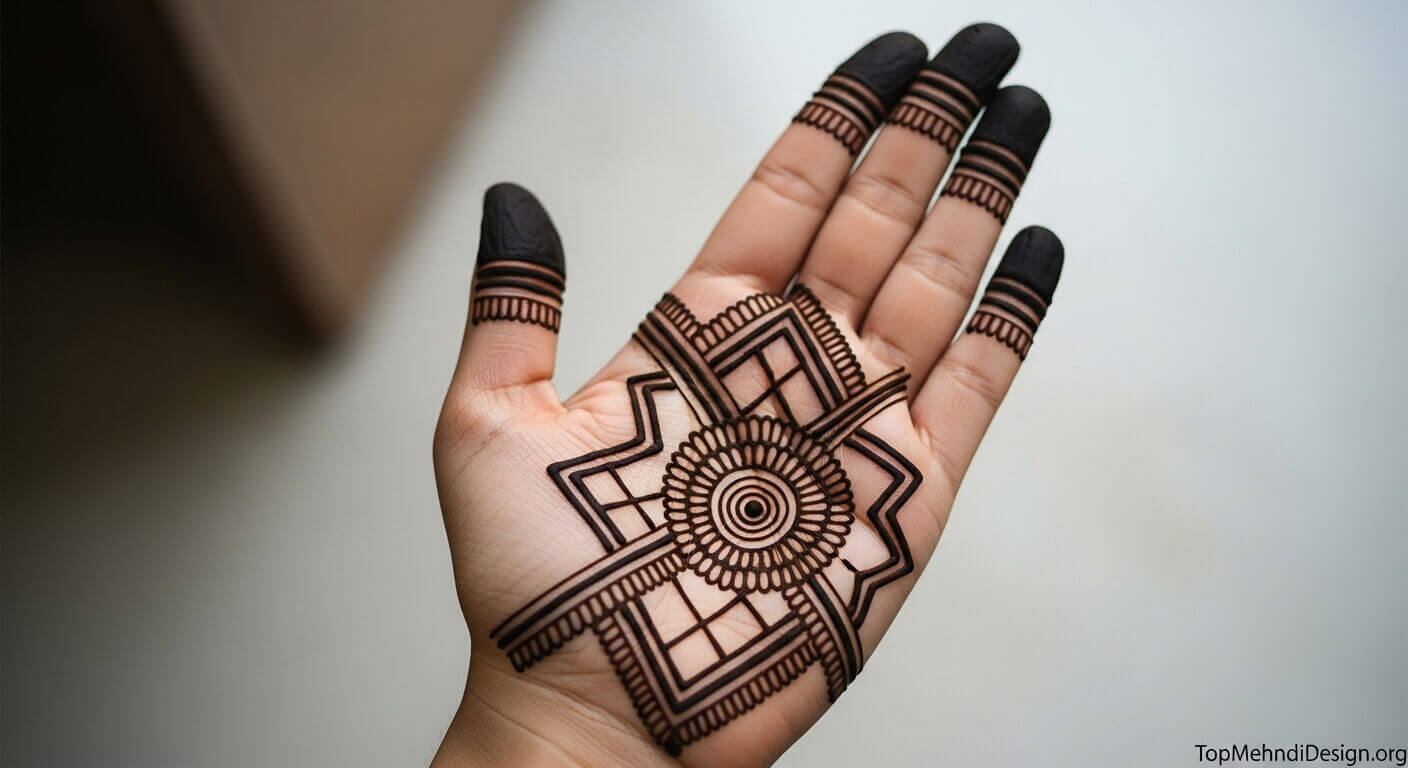
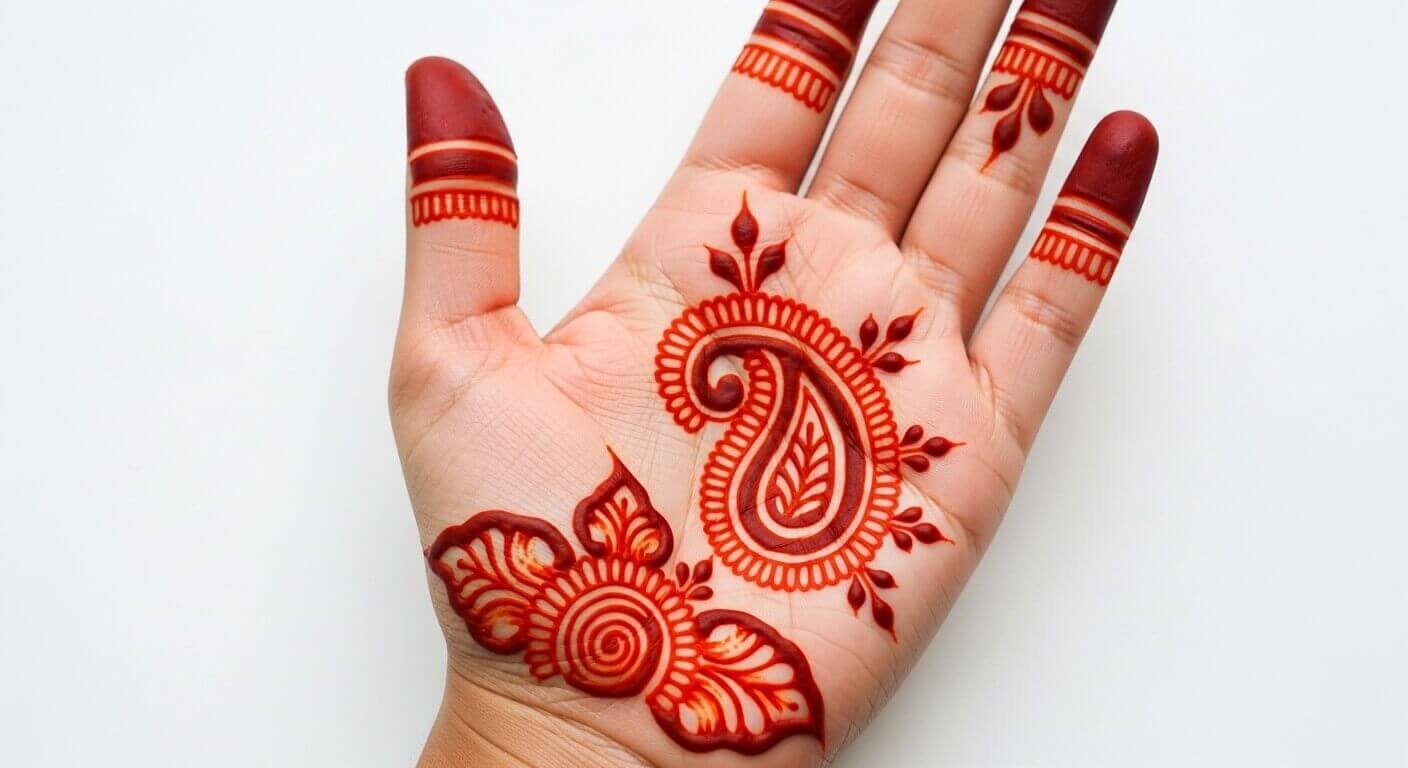
A basic lotus or simple mandala outline on the front palm is the most encouraging beginner Teej design because the deep, dark color makes even simple shapes look genuinely impressive.
Beginner Finger Teej Designs
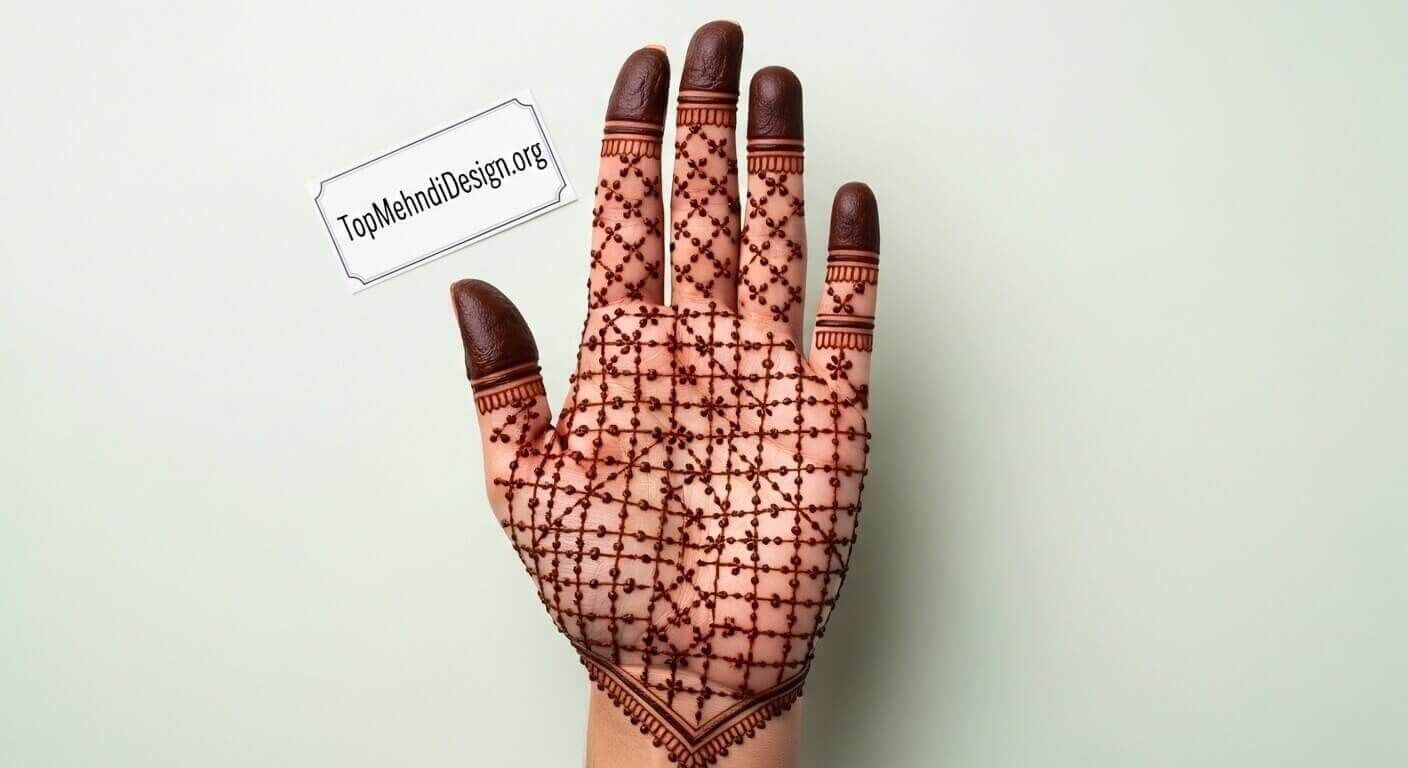
Finger mehndi is the most beginner-friendly starting point of all. Simple ring lines, basic dot chains, and tiny leaf accents on individual fingers require minimal cone control and produce beautiful results even in a complete beginner’s first attempt.
Common Beginner Mistakes and How to Fix Them
Shaky Lines
The most common beginner problem. Solution: rest your cone hand’s little finger on the skin surface as a stable pivot point.
Never apply mehndi with a completely unsupported floating hand. The little finger anchor is the single most effective technique for smooth beginner lines.
Uneven Pressure
Inconsistent cone pressure creates lines that vary unpredictably from thick to thin. Solution: Practice consistent medium pressure on paper until lines feel completely even before applying to the skin. Ten minutes of paper practice before every session dramatically improves control.
Drying Too Fast
Beginners often rush and move too quickly before the paste dries. Solution: work in sections, allow each area to begin drying before moving adjacent hands. A small portable fan accelerates drying safely.
Smudging Wet Paste
Solution: always work from the wrist toward fingertips, never from fingertips toward wrist so your applying hand never crosses over freshly applied wet paste.
Expert Tips for Beginner Teej Mehndi Success 2026
Practice on Paper First
Before every Teej Mehndi session, spend 5 to 10 minutes drawing the planned design on white paper. Paper practice builds muscle memory, tests cone pressure, and identifies difficult elements before they appear on skin, where mistakes cannot be erased.
Start Small and Simple
Every mehndi expert began with the simplest possible designs. A perfect, simple crescent on clean skin is more beautiful than a complex pattern applied with shaky, uncertain lines.
Start with the simplest Teej designs, master them completely, then gradually add complexity as confidence grows.
Fresh Henna for Best Beginner Results
Use the freshest available henna cone. Fresh henna flows consistently and smoothly, the most important quality for beginners who need predictable paste behavior while learning cone control. Old or dried henna clogs, spurts, and flows inconsistently the most frustrating experience for beginners.
Leave Paste Overnight
For the darkest possible beginner Teej mehndi color, apply the evening before Teej and leave overnight. Overnight, paste contact produces the deepest dark stain, and deep dark color makes even simple beginner designs look genuinely magnificent in the morning.
Conclusion
Teej Mehndi Design for Beginners 2026 is the most encouraging, most achievable, and most genuinely joyful entry into festival henna artistry.
Whether you draw your first simple crescent moon wrist bracelet, your first basic lotus palm design, your first finger ring patterns, or your first small floral back hand composition, your Teej mehndi 2026 will be beautiful because it is applied with devotion, practiced with patience, and worn with the authentic joy of a woman celebrating the most sacred monsoon festival of love and marital devotion.
Begin simply, practice consistently, trust the process, and remember that the most meaningful element of every Teej mehndi design is never the complexity of the pattern; it is always the love and devotion with which it is applied. 🌙🌿✨
FAQs
1: Which is the easiest Teej Mehndi design for complete beginners?
The simple crescent moon wrist design is the easiest, just two curved arcs and dot stars, taking 10 minutes. The basic wrist bracelet takes 8 minutes and is even simpler. Both carry sacred Teej symbolism, making them perfect first designs.
2: How long does beginner Teej mehndi take to apply?
Simple beginner designs take 8 to 20 minutes. Medium beginner patterns take 20 to 35 minutes. Even the simplest designs look beautiful with proper overnight leave-on time, developing rich dark color.
3: How to get dark color from beginner Teej Mehndi?
Apply the evening before Teej, leave overnight for a minimum of 8 hours, apply lemon sugar mixture while paste is on skin, avoid water 12 hours after removal, and apply coconut oil daily. Dark color makes simple beginner designs look genuinely impressive.
4: What should beginners practice before the Teej Mehndi application?
Practice straight lines, curved arcs, consistent pressure control, simple petal shapes, and dot placement on paper for 10 minutes before every mehndi session. Paper practice is the single most effective technique for improving beginner mehndi skills.
5: Is Teej Mehndi suitable for complete beginners with no experience?
Absolutely! The simplest Teej mehndi designs require only basic curved lines and dot placement, achievable in a first attempt. Start with the crescent-moon wrist or simple bracelet designs, and gradually build confidence toward more elaborate Teej patterns.